The Window
& Door Store

What Is the Best Quality Windows and Doors for Global Buyers?

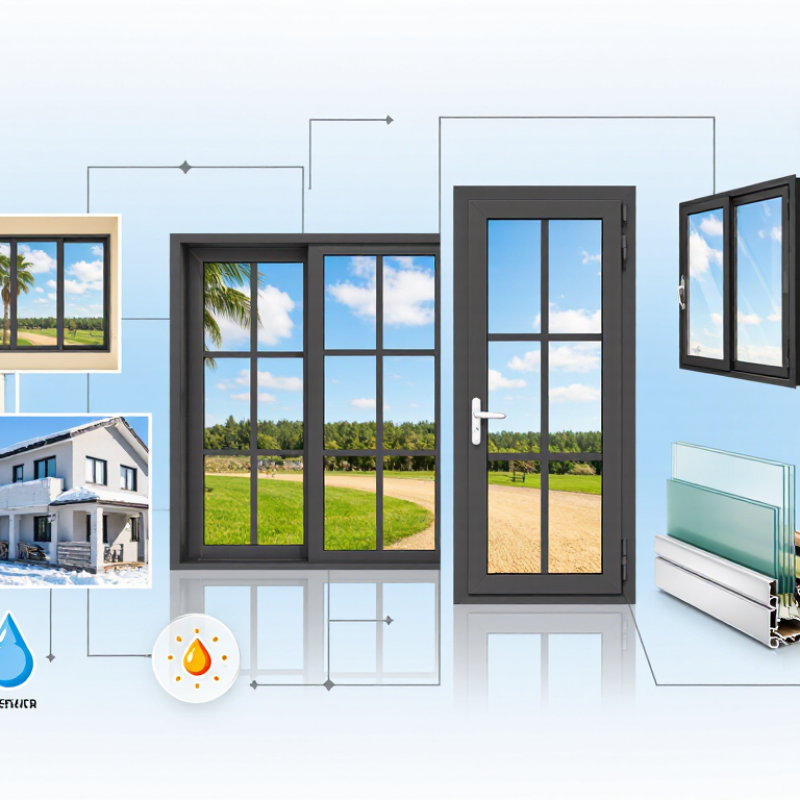
Choosing quality windows and doors is not simply a matter of selecting the highest price. Global buyers must match performance with climate, building use, installation quality, and long-term maintenance. A coastal home needs corrosion resistance and strong seals. A cold-climate project needs low U-values and carefully selected glazing. In hot regions, solar heat-gain control may matter more than maximum insulation. The wrong specification can leave condensation on the glass, drafts around the frame, or rising energy bills.

The International Energy Agency’s Buildings 2024 report states that buildings consume about 30% of global final energy. The U.S. Department of Energy also reports that windows can account for 25% to 30% of residential heating and cooling energy use. These figures explain why fenestration deserves engineering attention, not only visual comparison. Stephen Selkowitz, a former Lawrence Berkeley National Laboratory building scientist, described windows as “the most complex and dynamic part of the building envelope.” That observation remains practical. Glass, frames, hardware, weather seals, and installation work as one system.

Performance data still requires careful interpretation. A low U-value does not automatically guarantee a reliable door. A beautiful window can fail through poor drainage or weak installation. This article examines thermal performance, air and water resistance, acoustic control, security, certifications, lifecycle cost, and supplier reliability. It will compare recognized standards, including NFRC and EN testing approaches, while considering regional conditions. Some conclusions may remain imperfect because certification methods and climate expectations differ. That limitation matters. The best quality windows and doors are not universally identical; they are properly tested, correctly specified, and competently installed for the project.

What Is the Best Quality Windows and Doors for Global Buyers?

How to Define Quality in Windows and Doors

What Is the Best Quality Windows and Doors for Global Buyers?

Quality in windows and doors is more than a smooth finish or attractive glass. It means reliable performance in the climate where the product will be installed. A coastal home needs corrosion-resistant hardware. A cold region needs strong thermal insulation. In a busy city, sound control may matter more than appearance.

Quality means reliable performance in the climate where the product will be installed.

From practical project experience, I define quality through measurable details. Check the frame material, glass configuration, seals, drainage design, and hardware strength. Ask for test reports covering air leakage, water resistance, wind pressure, and thermal performance. Manufacturing consistency also matters. One excellent sample cannot represent every shipment.

Tips: Compare documented performance, not marketing phrases. Request installation instructions and maintenance guidance. Inspect corner joints, gasket contact, and locking points. Test the sample by opening it repeatedly. Small weaknesses often appear there.

A dependable supplier should explain limits clearly. No window suits every climate or building style. Certification should match the target market’s requirements, while technical documents should be clear and current. Warranty terms also deserve careful reading, especially for glass, finishes, and hardware. I have seen buyers focus on price and overlook installation quality. That mistake can reduce performance, even when the product itself is well made. Quality is shared between design, production, delivery, and fitting.

Which Materials Offer the Best Long-Term Performance

Long-term window and door performance depends more on material choice than appearance. Yet no single material works best in every climate. Coastal homes face salt, strong wind, and constant moisture. Inland buildings may face dust, freezing nights, and intense summer heat.

Thermally broken aluminum offers strong frames, narrow sightlines, and good resistance to warping. It suits large openings and harsh sunlight. However, poor thermal breaks can create condensation around the frame. uPVC provides reliable insulation and needs little maintenance. It can perform well in cold regions, but low-quality profiles may discolor or expand under severe heat. Fiberglass remains dimensionally stable and handles temperature changes effectively. Its higher initial cost may discourage some buyers.

Wood delivers warmth and can last for decades with careful sealing. It demands regular inspection, especially near exposed joints and drainage points. Small failures become expensive.

I have seen attractive doors weaken because installers ignored water management. That mistake matters more than many buyers expect.

Hardware also deserves attention. Stainless steel hinges, protected locks, and replaceable weather seals improve service life. Ask for air, water, wind-load, and thermal performance records from recognized testing bodies. Check the installation method, not only the frame material. A strong product can still fail when the sill lacks proper flashing.

Local climate, repair access, and available replacement parts should guide the final decision. There is no perfect option. There is only a better-matched one.

How Energy Efficiency and Weather Resistance Are Measured

For global buyers, the best windows and doors are not judged by appearance alone. Their performance is measured under controlled conditions and real weather demands. Energy efficiency starts with U-value, which shows how quickly heat passes through the frame and glass. A lower U-value usually means better insulation. Solar Heat Gain Coefficient, or SHGC, measures how much sunlight becomes indoor heat. Warm climates often need lower SHGC, while cold regions may benefit from controlled solar gain. Air leakage is tested at a stated pressure difference. Lower leakage helps reduce drafts and wasted heating or cooling. Small details matter. Spacers, seals, frame joints, and glass coatings can change the result.

Weather resistance requires more than a strong product certificate. Water-penetration tests spray the closed unit while pressure is applied. Wind-load testing checks whether the frame bends, leaks, or remains secure. Test results should identify the standard, pressure level, sample size, and laboratory. Independent, accredited testing offers more reliable evidence than broad claims. Yet laboratory performance can fall after poor installation. I have seen excellent units lose comfort because gaps were poorly sealed or drainage paths were blocked. Site exposure also matters. Coastal salt, driving rain, freezing cycles, and intense sunlight create different risks. Buyers should request performance data for the intended climate and verify local installation practice. No rating tells the whole story. Good decisions combine measured values, practical experience, and an honest review of limitations.

What Is the Best Quality Windows and Doors for Global Buyers?

How energy efficiency and weather resistance are measured

Lower U-value and air leakage indicate better thermal and airtight performance, while a higher water-tightness pressure indicates stronger resistance to wind-driven rain. The benchmark values represent commonly specified high-performance targets measured under recognized European and international test methods, including ISO 10077-1, EN 12207, EN 12208 and ASTM E331.

What Features Ensure Security, Durability, and Easy Maintenance

Choosing quality windows and doors starts with security, not appearance. In project inspections, I look for laminated safety glass, reinforced frames, and reliable multipoint locks. These features resist forced entry and reduce injury risks if glass breaks. Lock cylinders should also resist drilling, picking, and corrosion.

Durability depends on the whole system. Aluminum frames need thermal breaks to reduce condensation and indoor heat loss. uPVC frames should contain strong internal reinforcement, especially for wide doors. Proper drainage channels prevent trapped water after heavy rain. Powder-coated or marine-grade finishes perform better in harsh coastal climates. Check documented test results for air leakage, water resistance, wind pressure, and thermal performance. Certificates matter, but installation quality matters more.

Easy maintenance is often overlooked. Smooth surfaces, replaceable seals, and accessible drainage holes save time over many years. Stainless steel hardware helps, though it still needs occasional cleaning and lubrication. No window is maintenance-free. I have seen expensive units fail because installers ignored alignment and sill flashing. That mistake is frustrating. Buyers should request clear installation instructions, spare-part support, and warranty terms in writing. A small sample test can reveal weak locks, noisy operation, or poor sealing before a large order. Performance may vary by climate, wall structure, and local building requirements, so one specification cannot suit every market.

How Global Buyers Can Compare Suppliers and Product Standards

What Is the Best Quality Windows and Doors for Global Buyers?

Global buyers should compare suppliers through measurable standards, not attractive samples. UNEP’s 2023 Global Status Report estimated that buildings consumed about 34% of global energy in 2022. This makes thermal performance a purchasing issue, not only a design choice. Request verified U-values, solar heat gain coefficients, air-leakage results, and water-resistance tests. Check whether laboratories follow recognized standards, such as ISO, EN, ASTM, or regional equivalents. A supplier’s certificate should show the tested product configuration, not a similar model.

A practical supplier review also examines production control. Ask for batch inspection records, material traceability, hardware specifications, coating thickness, and glass composition. The International Energy Agency highlights efficiency as a major route for reducing building energy demand. However, a strong window can perform poorly after careless installation. I would compare installation guides, tolerances, drainage details, and after-sales response times. This part is often overlooked. It should not be.

Tips: Build a comparison sheet with five columns: tested performance, standard used, laboratory details, warranty terms, and installation support. Confirm test dates and product sizes. Large units may perform differently. Do not rely on marketing phrases like “premium quality.” Visit a factory when possible, inspect corner joints, seals, and drainage channels, and request a small pilot order before full production. No comparison is perfect. That is why documented evidence matters more than polished presentations.

What Is the Best Quality Windows and Doors for Global Buyers?
How Global Buyers Can Compare Suppliers and Product Standards
A practical comparison framework for evaluating product performance, testing evidence, compliance, installation quality, and long-term value across international markets.
Comparison Dimension Recommended Quality Benchmark How It Is Measured Evidence Buyers Should Request Why It Matters in International Purchasing
Thermal Insulation High priority
Lower whole-window U-factor; use climate-specific targets rather than frame-only figures.
U-factor or U-value, normally expressed in W/m²·K or Btu/h·ft²·°F. Certified thermal-performance report for the complete window or door assembly, including frame, glazing, spacer, and hardware. Improves indoor comfort and reduces heating or cooling demand. Values must be compared using the same measurement system and calculation method.
Solar Heat Control Climate dependent
Lower SHGC is generally useful in hot, sunny climates; higher SHGC may benefit cold climates with passive solar design.
Solar Heat Gain Coefficient, expressed from 0 to 1. Glazing specification, SHGC test result, visible transmittance, and the intended building orientation. Helps buyers balance daylight, glare, cooling loads, and passive solar gains for the project location.
Air Leakage Lower is better
Specify a maximum air-leakage rate and ensure the rating is based on the complete operable product.
Air leakage at a stated pressure, commonly reported in m³/h·m², L/s·m², or cfm/ft². Laboratory test report, test pressure, product size, opening type, and whether the result applies to the complete unit. Low leakage reduces drafts, moisture movement, noise transmission, and energy loss. Installation quality can significantly affect site performance.
Water Penetration Resistance Project specific
Specify a pressure level appropriate for the building height, exposure, rainfall, and local code.
Water penetration test pressure, usually stated in Pa or psf. Test standard, pressure achieved, test duration, product configuration, drainage design, and sill details. Important for coastal, storm-prone, high-rise, and high-rainfall projects. A passing result does not replace correct flashing and installation.
Wind Load Capacity Engineering required
Design pressure must match the building location, height, exposure category, opening size, and local regulations.
Positive and negative design pressure, typically expressed in Pa or psf. Structural calculation, pressure test report, maximum tested dimensions, mullion details, anchoring method, and glass thickness. Prevents excessive deflection, seal failure, glass damage, and frame deformation in severe weather conditions.
Acoustic Performance Noise dependent
Select the rating according to traffic, airport, industrial, or residential noise exposure.
Sound Transmission Class, Outdoor-Indoor Transmission Class, or weighted sound reduction index, depending on the market. Acoustic test report for the exact glass build-up, frame, seals, vents, and opening configuration. Acoustic performance depends on the whole assembly. Laminated glass, wider air spaces, and proper sealing can improve results.
Security and Forced-Entry Resistance Use a tested resistance class where required; include laminated glass, multipoint locking, robust keep areas, and protected hardware. Market-specific forced-entry or security classification and hardware-cycle testing. Security test certificate, lock and hardware specification, glass classification, cylinder details, and tested product drawings. Security ratings are not interchangeable between regions. Buyers should confirm the applicable local standard before ordering.
Durability and Operating Cycles Long-term value
Hardware, seals, rollers, hinges, and finishes should be tested for repeated operation and environmental exposure.
Opening-and-closing cycles, corrosion exposure, weathering tests, and component durability assessments. Cycle-test results, corrosion test duration, coating specification, replacement-part policy, and maintenance instructions. Durability affects service costs, warranty claims, user safety, and the availability of compatible replacement components.
Frame and Material Quality Specify alloy or material grade, wall thickness, thermal-break design, reinforcement, drainage, and surface-finish requirements. Material certificates, dimensional inspection, coating thickness, adhesion, and profile tolerances. Profile drawings, material declarations, coating test records, sample approval, and incoming-quality inspection plan. Nominal material descriptions are not enough. The same material category can contain major differences in geometry, reinforcement, and finish quality.
Glazing and Spacer Design Define glass thickness, low-emissivity coating, gas fill, spacer type, safety treatment, and edge-seal requirements. Glass configuration, center-of-glass U-factor, gas-fill specification, visual quality, and safety classification. Glass certificate, sealed-unit production records, coating position, spacer specification, and safety-glass test evidence. Glazing often represents the largest performance area of a window or door and must be matched to climate, size, wind load, and safety needs.
Standards and Regulatory Compliance Verify locally
Products should comply with the destination market’s building, energy, safety, and labeling requirements.
Applicable regional or national standards, conformity assessment, and product declarations. Current certificates, scope of certification, test laboratory accreditation, declaration of performance, and traceable product identification. Certificates may apply only to a specific size, configuration, factory, or production period. Buyers should verify the exact scope and validity.
Installation Compatibility Product design must suit the wall system, opening dimensions, sill condition, drainage plane, anchoring method, and local climate. Approved installation details, tolerances, anchorage spacing, sealant compatibility, and site inspection records. Shop drawings, method statement, installation manual, interface details, approved sealants, and installer training records. Even a high-performing product can fail if it is incorrectly measured, anchored, flashed, sealed, or drained on site.
Quality-Control System Essential
Use documented inspection procedures from raw materials through fabrication, assembly, packing, and shipment.
Inspection records, nonconformance rate, calibration status, batch traceability, and final acceptance criteria. Quality plan, inspection checklist, material traceability, calibration certificates, corrective-action records, and pre-shipment inspection results. A reliable process is more valuable than a single attractive sample because it supports consistent quality across repeated production batches.
Warranty and After-Sales Support Warranty terms should clearly define coverage, exclusions, response time, spare parts, labor responsibility, and claim procedures. Warranty duration and service-level commitments stated in the purchase contract. Signed warranty document, spare-parts list, service contacts, claim workflow, maintenance schedule, and project references without undisclosed brand details. International buyers need practical support for replacement hardware, glass units, seals, finishes, and technical issues after delivery.
Total Cost of Ownership Compare beyond price
Evaluate purchase price together with transport, installation, energy use, maintenance, replacement, and expected service life.
Life-cycle cost model using project-specific energy prices, climate data, maintenance intervals, and service assumptions. Itemized quotation, packaging and freight terms, installation scope, energy-performance data, maintenance requirements, and spare-parts pricing. The lowest initial quotation may create higher long-term costs if it has weaker performance, inconsistent quality, difficult installation, or limited support.
Buyer note: Performance values should be compared only when the test method, product size, configuration, pressure, units, and certification scope are equivalent. Always confirm the destination market’s current building codes and obtain project-specific engineering approval before purchase.