How to Choose Turnkey Cleanroom Solutions in 2026?
Choosing turnkey cleanroom solutions in 2026 requires more than comparing room prices. It requires evidence, operational experience, and careful risk assessment. Grand View Research estimates that the global cleanroom technology market will continue expanding through 2030, driven by pharmaceutical manufacturing, biotechnology, medical devices, and semiconductor production. MarketsandMarkets also identifies stricter contamination controls and advanced manufacturing as major growth factors. However, market forecasts differ. That uncertainty deserves attention.
A practical evaluation should examine airflow design, ISO 14644 classification, temperature stability, humidity control, pressure cascades, filtration, monitoring, validation, and future expansion. Imagine a filling room at 21°C, with visible pressure gauges and a documented recovery test after door opening. Details like these reveal whether turnkey cleanroom solutions are genuinely production-ready. Dr. W. Whyte, a respected cleanroom technology author, stated, “The cleanroom is a controlled environment in which the concentration of airborne particles is controlled.” His point remains important: cleanliness must be measured, maintained, and verified, not simply promised.
Buyers should request airflow calculations, factory acceptance testing records, commissioning procedures, and lifecycle maintenance costs. They should also ask who owns design changes when utilities move or equipment grows. A low initial bid may conceal expensive validation work later. That is easy to underestimate. Reliable suppliers connect engineering decisions with product quality, worker safety, energy performance, and regulatory expectations. This guide will compare suppliers, technologies, documentation, and selection criteria. It will also examine uncomfortable trade-offs, because the fastest installation is not always the safest long-term choice.
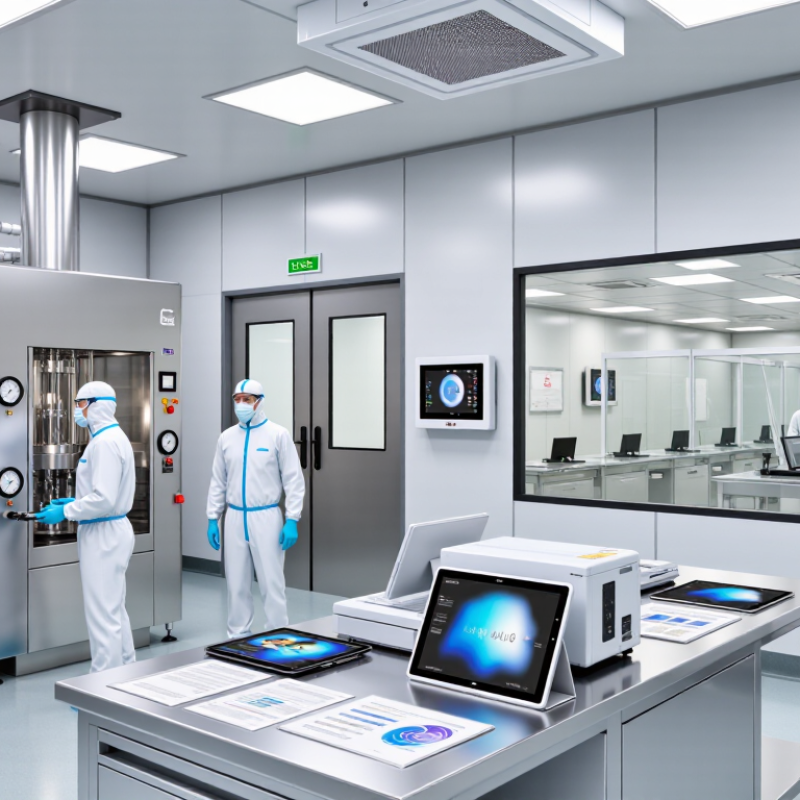
What Turnkey Cleanroom Solutions Include in 2026
How to Choose Turnkey Cleanroom Solutions in 2026?
In 2026, a turnkey cleanroom should include more than insulated panels and bright lighting. It should connect design, construction, HVAC, HEPA filtration, utilities, monitoring, validation, and operator training. A practical supplier begins with your process risks, room classification, airflow pattern, temperature targets, and cleaning routine. ISO 14644-1 remains the key reference for airborne particle classification. It should guide testing, not replace engineering judgment.
MarketsandMarkets estimates the cleanroom technology market could grow from about USD 8.1 billion in 2024 to USD 11.4 billion by 2029. This growth reflects tighter quality controls and expanding pharmaceutical, electronics, and medical production. A reliable turnkey package should include airflow visualization, pressure monitoring, alarm records, filter integrity testing, and commissioning documents. It should also define who maintains the system after handover. That detail is often missed. It matters.
Tips: Ask for a room-by-room responsibility matrix. Check who supplies sensors, software, spare filters, and validation reports. Request FAT and SAT records before final payment. Walk through a similar operating facility, if possible. A cheaper design may create higher energy bills and harder cleaning later. Even experienced teams can underestimate door traffic, material transfer, or maintenance access. Leave room for revision.
How to Define Cleanroom Requirements and Compliance Goals
How to Choose Turnkey Cleanroom Solutions in 2026?
How to Define Cleanroom Requirements and Compliance Goals
A reliable cleanroom project starts with a written requirement, not a supplier catalogue. Define the process, products, personnel, equipment, and contamination risks first. Record particle limits, pressure differences, temperature, humidity, airflow, and recovery time. These details shape the room classification and building services.
Use applicable standards, national rules, and industry guidance as separate checkpoints. ISO 14644 can support airborne particle classification and testing plans. Regulated manufacturing may also require documented quality systems and controlled environmental monitoring. Ask a qualified consultant to review the user requirement specification. Local authorities may interpret compliance differently.
Walk through the proposed workflow physically. Mark material entry, personnel changing, waste removal, and maintenance access. A cleanroom can meet particle targets yet fail operationally. Doors may clash. Filters may be difficult to replace. Operators may cross dirty and clean routes.
Small details matter.
Define acceptance tests before construction begins. Include airflow visualization, particle counting, pressure verification, temperature mapping, and alarm checks. Set who witnesses each test and how deviations are corrected. Keep calibration records and approved drawings in one controlled system.
Our early projects sometimes focused too heavily on classification numbers. That was a mistake. Energy use, cleaning time, operator comfort, and future expansion also affect performance. Revisit the requirements with production, quality, engineering, and safety teams. Their priorities will not always agree. That tension deserves documentation, not silence.
How to Compare Design, Technology, and Facility Integration
Choosing a turnkey cleanroom in 2026 requires more than comparing construction prices. Compare the design logic, technology, and facility integration. MarketsandMarkets’ 2024 Cleanroom Technology report projects the sector to grow at about 6% annually through 2029. That growth reflects stricter contamination control and faster production changes. A strong design should show airflow maps, pressure cascades, recovery times, and maintenance access. Ask for measured data, not attractive drawings. Site experience matters here.
Technology must support the process, not decorate it. Review monitoring points, alarm histories, filter replacement access, and software compatibility. ISO 14644-1 classifies airborne cleanliness by particle concentration, but it does not guarantee product quality. Your validation plan must connect room performance with process risks. Facility integration is often underestimated. Check electrical loads, chilled-water capacity, drainage, fire systems, material routes, and future expansion space. The U.S. Department of Energy repeatedly identifies ventilation and conditioning as major industrial energy loads; inefficient airflow can quietly increase operating costs.
Tips: Build a weighted comparison table. Give safety, validation, uptime, energy, and serviceability separate scores. Request one operating reference and inspect its technical records. Do not accept “fully integrated” without interface drawings. A perfect scorecard is impossible. My own preference is to leave a small uncertainty margin, because real facilities rarely behave like simulations. Translate every promise into a test, deadline, and responsible party.
How to Choose Turnkey Cleanroom Solutions in 2026?
Comparing design requirements, cleanroom technology, and facility integration through ISO 14644-1 particle limits.
Design
Select the ISO classification according to process sensitivity, personnel flow, material flow, and room zoning.
Technology
Lower particle limits generally require stronger filtration, airflow control, monitoring, and validation.
Facility Integration
Confirm compatibility with HVAC capacity, utilities, fire protection, structural loads, access routes, and future expansion.
Reference basis: ISO 14644-1 maximum permitted concentration of particles ≥0.5 μm per cubic metre of air. Values are shown on a logarithmic scale to make the classification differences readable.
How to Verify Performance, Scalability, and Long-Term Value
Turnkey cleanroom solutions in 2026 should be judged by evidence, not polished layouts or impressive equipment lists. Request qualification records for airflow, pressure differentials, temperature, humidity, particle levels, and recovery time. ISO 14644-3 provides recognized testing methods for these critical performance indicators. Ask for raw test data, calibration certificates, acceptance limits, and documented deviations.
Performance must remain stable when production expands. A useful design review examines spare utility capacity, modular walls, future air-handling loads, and equipment access routes. The 2024 ASHRAE Handbook notes that cleanroom energy demand is strongly influenced by airflow and filtration requirements. The U.S. Department of Energy also reports that cleanrooms may consume 30–50 times more energy than comparable office areas. Energy meters should therefore be installed by room and major system. Otherwise, efficiency claims remain difficult to verify.
Long-term value depends on maintainability. Check filter replacement access, sensor availability, software ownership, operator training, and response times for service support. Require lifecycle cost models covering energy, consumables, calibration, cleaning, and planned shutdowns. EU GMP Annex 1 emphasizes contamination control strategies and continued monitoring, not one-time installation success. That matters. A turnkey project can pass commissioning yet become costly after three years. Independent testing is worth the extra budget. Still, many buyers underfund it. Review assumptions annually, because product volumes, regulations, and process risks rarely stay unchanged.