How to Choose Artificial Flowers for Your Business?
Choosing Artificial Flowers for a business is more than picking colors that look attractive online. The right stems must suit your customers, display setting, price point, and replacement cycle. A florist may prioritize lifelike petals and flexible stems. A hotel buyer may care more about consistent color, easy cleaning, and arrangements that hold their shape under bright lobby lights.
“Judge each stem at arm’s length and under the light where customers will see it,” says artificial-floral sourcing specialist Elena Morris. This is a practical selection rule, not a substitute for testing samples. Ask suppliers for close-up images, material details, minimum order quantities, and care guidance. Then inspect a sample in person. Feel the leaves. Check whether wire shows through the stems. Compare the shade beside your packaging or interior finishes.
Small details matter. A glossy leaf can look convincing in a photograph but harsh beside a matte ceramic vase. Inconsistent dye lots can also make repeat orders difficult. No sample tells the whole story. Test carefully, and leave room to revise your choice. The following guide covers product quality, customer fit, supplier reliability, pricing, and display considerations, helping you choose Artificial Flowers with fewer costly surprises.
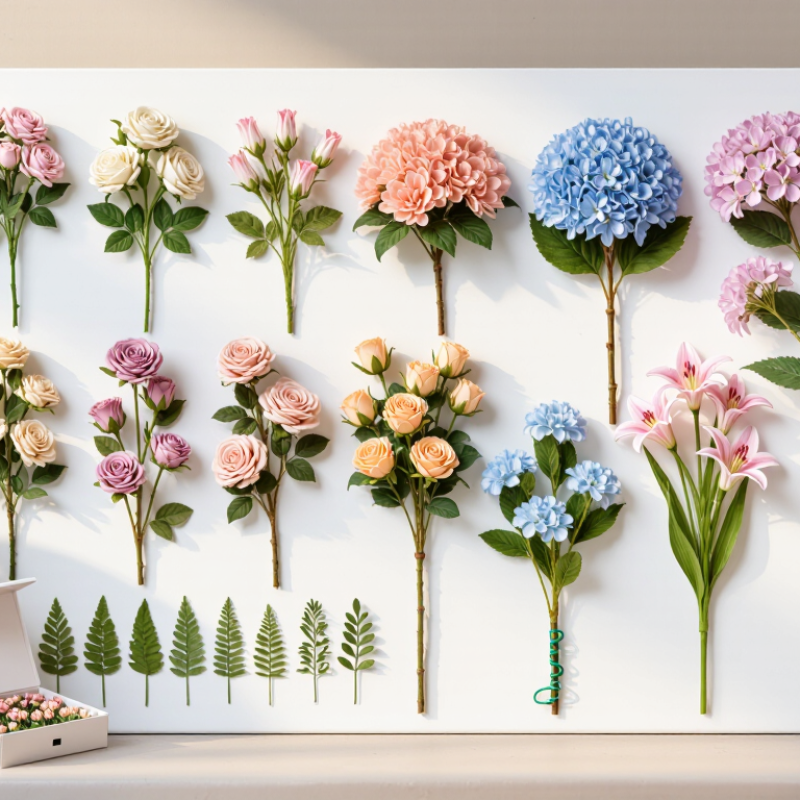
Identify Your Business Needs and Target Customers
Before choosing artificial flowers, identify where they will be used and who will notice them. Start with the setting. A hotel lobby needs arrangements that hold their shape under bright lights and frequent handling. A small café may need compact stems that do not crowd tables or block sightlines. Ask buyers about cleaning routines, display size, and how often they refresh seasonal décor. These details guide stem length, material, color, and packaging.
Your customers may value realism, low maintenance, or a specific price point. Event planners often need matching quantities and dependable color consistency. Home décor shops may prefer varied bunches that customers can combine themselves. Not every stem works. Some buyers want soft, muted tones; others choose vivid flowers for window displays. Review purchase questions and returns, then compare them with what customers actually reorder. Assumptions can be wrong.
Test samples in the intended space before placing a large order. Check petals from several feet away, then inspect leaves up close for visible seams or shiny surfaces. Feel whether stems bend easily and recover without kinking. Ask staff to unpack and arrange a sample; their feedback may reveal awkward ties or fragile petals. A single checklist will not fit every business. Leave room for a small trial order, especially when customer preferences are still unclear.
Compare Artificial Flower Materials, Styles, and Realism
Choosing artificial flowers starts with material, because touch and light reveal more than a product photo. Polyester is affordable, colorfast, and suited to large-volume displays, but glossy petals can look flat under bright retail lighting. Polyethylene stems often hold sharper shapes and more natural-looking veins. “Silk” commonly describes a soft textile finish, not necessarily actual silk. Check the label.
Style should match viewing distance. For window displays, bold color and full silhouettes read well from across the street. For hotel tables or event work, inspect flowers at arm’s length: look for varied petal angles, realistic centers, and stems that bend without kinking. A Grand View Research market report estimated the global artificial flowers market at about US$1.52 billion in 2023, indicating substantial commercial demand. Demand alone, though, does not make every finish convincing.
Request physical samples before placing a large order. Compare them beside a window and under warm indoor lights; some pale petals turn oddly gray. Also test whether dust wipes away without stripping color. That detail matters. A slightly irregular arrangement can look more natural than identical, perfectly spaced blooms, though it may take longer to assemble. Choose based on your customers’ viewing distance, handling needs, and display lifespan—not realism claims alone.
How to Choose Artificial Flowers for Your Business
Compare common materials by realism, durability, and suitability for outdoor displays.
Ratings are indicative buyer assessments on a 1–5 scale, not laboratory measurements. Actual performance varies with construction, finish, and UV protection. Polyester is often sold as “silk” in artificial flowers.
Assess Product Quality, Durability, and Safety
How to Choose Artificial Flowers for Your Business?
Assess Product Quality, Durability, and Safety
Artificial flowers can look convincing online, but close inspection tells a more useful story. Request a sample and examine its petals, stems, and joins in daylight. Rub a petal gently; color should not transfer, and edges should not fray. Bend a stem several times. It should hold its shape without exposing sharp wire or shedding coating. Details matter.
Durability depends on where customers will use the flowers. A display near a sunny window may fade faster than one in a shaded shop. For outdoor arrangements, ask how the materials handle moisture and UV exposure. Check whether the flowers can be dusted or wiped without losing color. If a supplier gives care guidance, compare it with your own cleaning routine before ordering in bulk.
Safety deserves the same attention as appearance. Ask for clear material information and relevant test documents for your intended market and use. Check for strong chemical odors, loose decorative pieces, and exposed wires, especially if products may be handled by children. Keep sample notes, including photos of defects and packaging. A small batch can reveal problems that a polished product photo cannot. Still, inspection has limits; supplier claims need verification, and even a careful check may miss an issue.
Evaluate Suppliers, Pricing, and Minimum Order Requirements
When choosing artificial flowers for your business, assess suppliers on consistency, communication, and product details—not price alone. Request close-up photos and a sample showing petal texture, stem flexibility, color, and finish. Ask whether the sample matches bulk production. A small shade difference can stand out across a full display.
Tips: Compare quotes item by item. Check what packaging, shipping, and sample costs include. Ask for the minimum order quantity per style and color, plus lead times and reorder options. Get answers in writing.
Calculate the landed cost per stem, then compare it with your expected selling price and storage capacity. A low unit price may require a large order that ties up cash or leaves you with unpopular colors. I would not treat the cheapest quote as the best deal; that shortcut can look clever until cartons arrive with uneven finishes. It is worth asking how defects are handled, too. Supplier responses reveal useful details, though they cannot guarantee every batch will be perfect. Start with a manageable order when possible, and track which styles actually sell before expanding.
Plan Inventory, Care, and Replacement Cycles
Choose artificial flowers by tracking demand, not by filling shelves with every color. Start with a small range of core stems, then record weekly sales, seasonal requests, and damaged-stock counts. The National Retail Federation’s 2024 Retail Returns Landscape report estimated that returns would equal 16.9% of U.S. retail sales. That figure covers retail broadly, not artificial flowers, but it underlines why flexible ordering matters. Keep slow sellers in smaller quantities. Review the numbers monthly.
Care affects replacement cycles. Dust stems with a soft brush, and store surplus stock in closed, dry bins away from direct sunlight. Check display pieces for faded petals, bent wires, loose leaves, or crushed packaging. Replace only the damaged stems when practical; swapping an entire arrangement may waste usable stock. Set inspection dates by location: a sunny shop window needs closer checks than a shaded shelf. I would not trust a fixed lifespan estimate. Exposure and handling vary too much.
Tips: Label boxes by flower type and color, and note each batch’s arrival date. Keep a few spare stems for popular arrangements. Photograph displays during inspections; color changes are easier to spot side by side. If a style sells slowly, test fewer units next time. A little guesswork remains.