Home / Blog
Buying home doors from global suppliers can widen your design choices and reduce project costs. Yet attractive catalogs rarely show the full purchasing risk. A door may look solid online, then arrive with a different veneer, weak hinges, or inaccurate dimensions. This guide presents ten practical tips shaped by supplier checks, sample reviews, and real project lessons. It explains how to compare materials, confirm manufacturing capacity, review quality records, and calculate shipping costs before payment. Experienced buyers know that a low unit price means little when packaging fails or replacement parts are unavailable. Details matter. So does documentation.
You will learn how to write precise specifications for size, core material, finish, fire rating, hardware, and tolerances. Ask for recent product samples, factory photographs, test reports, and references from comparable buyers. Verify that claims match recognized standards and your local building requirements. Independent inspections can reveal moisture damage, uneven paint, or poor assembly before the doors leave the factory. Communication also deserves attention: time zones, language gaps, and vague promises can quietly extend a schedule. Experienced procurement teams have overlooked threshold measurements and regretted it later. That mistake is avoidable, though not every risk disappears. Treat supplier selection as a documented process, not a quick online bargain. The goal is dependable home doors that arrive safely, fit correctly, and perform for years.
Before contacting global suppliers, define your door requirements in a written project sheet. Record opening width, height, wall thickness, threshold height, and frame depth. Measure each opening twice, because old homes rarely provide perfect rectangles. I once ordered from one “standard” dimension and paid for costly site adjustments. That mistake still shapes my specification process.
State the door’s purpose: entry, interior separation, fire resistance, sound control, or weather protection. Specify climate exposure, rain direction, sunlight, coastal air, and seasonal temperature changes. Choose material requirements based on these conditions, not appearance alone. List the opening direction, hinge side, handle height, glazing area, and security requirements. Check local building rules before accepting a supplier’s technical drawing. Requirements vary between regions.
Ask suppliers to confirm tolerances, test methods, certifications, packaging, replacement parts, and installation guidance. Include acceptable color variation and surface imperfections in the contract. A small sample or full-size corner mock-up can expose awkward clearances. Leave realistic tolerance for flooring, plaster, and imperfect masonry. Do not hide uncertainties; mark them as “to be verified” on the sheet. That makes comparison fairer and reduces disputed changes. But specifications can become too rigid. Allow practical adjustments after a qualified site inspection. This balance is easy to miss.
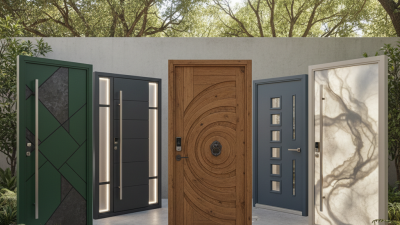
Buying home doors from global suppliers requires more than attractive photographs. Start by matching the material to your climate. Solid wood offers warmth, but humidity can cause movement. Fiberglass resists moisture and needs less maintenance. Steel can provide strength, though poor coatings may rust near salty air.
Check the door’s core, surface finish, and edge sealing. Ask whether the finish suits indoor or outdoor exposure. Styles should support the building’s character, not fight it. Measure the rough opening, wall thickness, threshold, and swing direction carefully. A small error can delay installation. Consider glazing, privacy, ventilation, and accessibility before approving the design. Simple details matter.
Review thermal, acoustic, water, air, and fire-performance data. Request test reports, product drawings, installation instructions, and material declarations. Standards differ between markets, so confirm which requirements apply at the installation site. Ask about wind-load ratings in exposed locations. Verify hardware compatibility and replacement availability. Use an independent pre-shipment inspection when practical. I have seen suppliers quote the leaf size instead of the complete door set. That mistake is easy to miss. Leave room for packaging damage, color variation, and imperfect site measurements. Reliability comes from clear records, realistic tolerances, and written answers—not confident promises.
Buying home doors from a global supplier requires evidence, not impressive photographs. I once trusted a polished factory video too quickly. That was a mistake. Ask for the manufacturer’s legal entity, production address, operating history, and recent export references. The ISO Survey of Certifications 2022 recorded more than 1.2 million ISO 9001 certificates worldwide, but a certificate alone does not prove good doors. Verify its number, issuing body, validity, and certified scope.
Tip 1 Request the original certificate and confirm it directly with the issuer. Check whether it covers door manufacturing, not only office management. Ask for test reports matching your exact model, glazing, frame, and hardware. Standards may differ by destination. Review fire resistance, air leakage, water tightness, thermal performance, and corrosion testing. The UNEP Global Status Report for Buildings and Construction reports that buildings use about 30% of global final energy. Poorly sealed doors can increase drafts and heating costs.
Tip 2 Inspect manufacturing experience in person or through an independent auditor. Look for organized cutting areas, moisture-controlled storage, traceable batch labels, and documented quality checks. Request samples from normal production, not a special showcase unit.
Tip 3 Ask for three comparable projects completed within the last five years. Contact the buyers directly. Payment records and delivery history matter too. I would also require a pre-shipment inspection, although this adds cost and can still miss problems. That limitation deserves honest attention.
Buying home doors internationally requires more than comparing the unit price. A low quotation may exclude frames, hardware, packaging, or inspection fees. Request a complete price list for the exact door size, material, finish, and glass specification. I once underestimated packaging costs because the quotation covered the door only. That mistake reduced the expected savings.
Check the minimum order quantity carefully. A supplier may accept ten doors but require one finish per batch. Ask whether mixed sizes or colors are allowed. Then review payment terms, production time, and sample charges. Shipping also needs precise attention. Confirm whether the price is EXW, FOB, CIF, or another delivery term. These terms change who pays for inland transport, freight, insurance, and unloading. Get carton dimensions and gross weight before booking transport. Small details matter.
Import duties can significantly change your final budget. Ask a licensed customs professional to confirm the correct tariff classification for each door type. Duty rates may differ between solid wood, metal, composite, and fire-rated products. Include customs processing, port storage, taxes, and local delivery. Do not rely only on a supplier’s estimate. Rules and fees can change. Request commercial invoices, packing lists, certificates, and test documents before shipment. I prefer written confirmation, although documents can still contain errors. A pre-shipment inspection provides useful evidence, especially when several specifications must match. Keep every quotation and revision. Clear records protect your purchasing decision.
Buying Home Doors from Global Suppliers: Quality, Contracts, and Support
A supplier’s catalog rarely proves manufacturing quality. Request production samples, material specifications, coating details, and test records before placing a large order. ISO’s 2022 Survey recorded more than 1.2 million ISO 9001 certificates worldwide. Certification helps, but it does not replace factory verification. Ask how workers measure frame diagonals, door thickness, moisture resistance, and hardware alignment. Require photos from pre-shipment inspections. A small tolerance error can create drafts, uneven gaps, or difficult installation. I once trusted polished samples too quickly. That decision created costly corrections.
Your contract should describe every measurable feature, including dimensions, glass type, packaging, inspection standards, delivery dates, and approved changes. Clarify payment milestones and the evidence required before final payment. Define responsibility for damaged cartons and missing parts. UNCTAD’s Review of Maritime Transport 2023 states that ships carry over 80% of global merchandise trade by volume. Therefore, packaging and shipping responsibilities deserve precise wording. Avoid vague promises like “premium quality.” They are difficult to enforce.
The warranty should state coverage, exclusions, claim deadlines, replacement procedures, and labor responsibility. Ask for a named support contact and a response-time target. Keep installation photos and batch numbers for future claims. Remote support may be slow across time zones. That is a practical risk, not a minor inconvenience. A useful supplier should provide spare hardware, troubleshooting guidance, and written answers. Still, I would test the support process before ordering. Send a realistic question and measure the response. Fast promises mean little without usable records.
| No. | Buying Tip | What to Verify | Recommended Evidence or Data | Contract Requirement | Warning Sign |
|---|---|---|---|---|---|
| 1 | Define the required door specification | Confirm door type, opening size, handing, swing direction, core material, surface finish, frame details, glazing, hardware, fire rating, acoustic rating, and intended interior or exterior use. | Approved technical drawing, dimension schedule, finish sample, hardware schedule, and a signed specification revision. | State that production must follow the approved drawing and that any change requires written approval before manufacture. | Vague product descriptions such as “standard door.” |
| 2 | Check applicable standards and regulations | Match the door to the destination market’s building, fire, energy, accessibility, safety, and product-performance requirements. Standards differ by country and application. | Relevant test reports, declarations of performance where applicable, installation instructions, and laboratory accreditation details. | Identify the responsible party for regulatory compliance, testing costs, document validity, and import approval. | Certificates with no product scope, test method, date, or issuing laboratory. |
| 3 | Audit the supplier’s quality-control system | Review incoming-material inspection, in-process checks, final inspection, nonconformity handling, calibration, traceability, and corrective-action procedures. ISO 9001 certification may support the review but does not replace product inspection. | Quality manual excerpts, inspection plan, sample inspection records, calibration certificates, and recent corrective-action examples. | Set measurable acceptance criteria and reserve the right to conduct or commission pre-shipment inspections. | Only a general quality certificate is provided; no product-specific records. |
| 4 | Request samples and a pre-production approval | Evaluate dimensions, flatness, joint quality, edge treatment, color consistency, surface defects, hardware fit, packaging, and installation compatibility. | Signed sample approval, approved color or finish reference, and a sample inspection checklist with photographs. | Make the approved sample the visual and functional reference for mass production, subject to agreed tolerances. | The supplier asks for bulk production before a representative sample is approved. |
| 5 | Use measurable acceptance criteria | Define dimensional tolerances, allowable surface defects, color variation, hardware operation, packaging condition, moisture protection, and functional performance. | Inspection checklist with sampling method, defect classification, tolerance values, and pass/fail rules. AQL sampling may be used when both parties agree on the inspection plan. | Specify remedies for rejected goods, including rework, replacement, credit, or refund, and define who pays related logistics costs. | Terms such as “good quality” or “premium finish” without measurable definitions. |
| 6 | Build a detailed international contract | Cover product specifications, quantity, price, currency, payment milestones, lead time, packaging, documents, intellectual property, inspection, delays, disputes, and governing law. | Signed purchase contract, pro forma invoice, approved drawings, packing requirements, and a document list. | Specify the selected Incoterms® 2020 rule and named place precisely; clarify transfer of risk, insurance, freight, customs, and delivery responsibilities. | A quotation is treated as the full contract with no agreed dispute process. |
| 7 | Verify packaging and shipping protection | Check moisture barriers, corner protection, stacking limits, pallet strength, carton labeling, shock protection, and compatibility with container transport and local handling. | Packaging drawing, loading plan, photographs of packed goods, gross and net weights, carton dimensions, and container-utilization data. | Define responsibility for transit damage, evidence requirements, insurance claims, and the time limit for reporting visible or concealed damage. | Doors are packed without edge protection or clear item-level identification. |
| 8 | Negotiate a clear warranty | Confirm warranty duration, start date, covered defects, exclusions, proof requirements, replacement process, labor coverage, and whether finish, hardware, warping, or delamination are included. | Written warranty certificate linked to the product specification, batch or order reference, installation conditions, and maintenance requirements. | Define response times, replacement or refund options, freight responsibility, and treatment of repeated or systemic defects. | Warranty language excludes nearly every practical failure mode. |
| 9 | Evaluate after-sales and spare-parts support | Confirm technical support, installation guidance, replacement hardware, touch-up materials, replacement panels, service communication, and documentation in the buyer’s working language. | Service contact details, spare-parts list, installation manual, troubleshooting guide, response-time commitment, and parts availability period. | Include service-level targets, escalation contacts, spare-parts pricing, and the procedure for handling recurring or safety-related failures. | No dedicated service contact after the purchase order is paid. |
| 10 | Control payment, inspection, and final release | Use milestone payments linked to approved documents, sample approval, production completion, inspection results, and shipping documents. Retain an agreed balance until contractual requirements are met. | Inspection report, production photographs, quantity reconciliation, commercial invoice, packing list, transport document, and certificates required by the destination market. | State that payment or shipment release does not waive claims for latent defects or breach of warranty. | Full payment is required before inspection, with no remedy for nonconforming goods. |