
High Carbon Steel Coil is valued for its hardness, strength, and strong resistance to surface wear. Its carbon content usually exceeds that of mild and medium-carbon steel. This difference changes how the material bends, cuts, forms, and responds to heat treatment. Higher carbon levels can improve edge retention and spring performance. They can also reduce ductility and increase cracking risks during forming. The details matter.
This guide explores the top 10 types of High Carbon Steel Coil used across manufacturing and engineering applications. These categories may include grades such as SAE 1070, SAE 1095, EN C75, SK5, and related spring or tool steels. Each type offers a different balance of hardness, flexibility, thickness control, and machinability. Actual performance depends on chemistry, rolling conditions, annealing, surface quality, and heat treatment. A coil with a clean surface may still fail if its hardness is poorly matched to the application. Small differences matter.
Reliable selection requires more than comparing carbon percentages. Buyers should review mill test certificates, dimensional tolerances, tensile strength, hardness values, and applicable ASTM, EN, or JIS requirements. Experienced suppliers also examine edge condition, coil weight, packaging, and storage exposure. No universal ranking is perfect. A grade that performs well for saw blades may be unsuitable for stamped components or industrial springs. This overview provides a practical starting point, while final decisions should reflect verified test data, production conditions, and the manufacturer’s technical guidance.
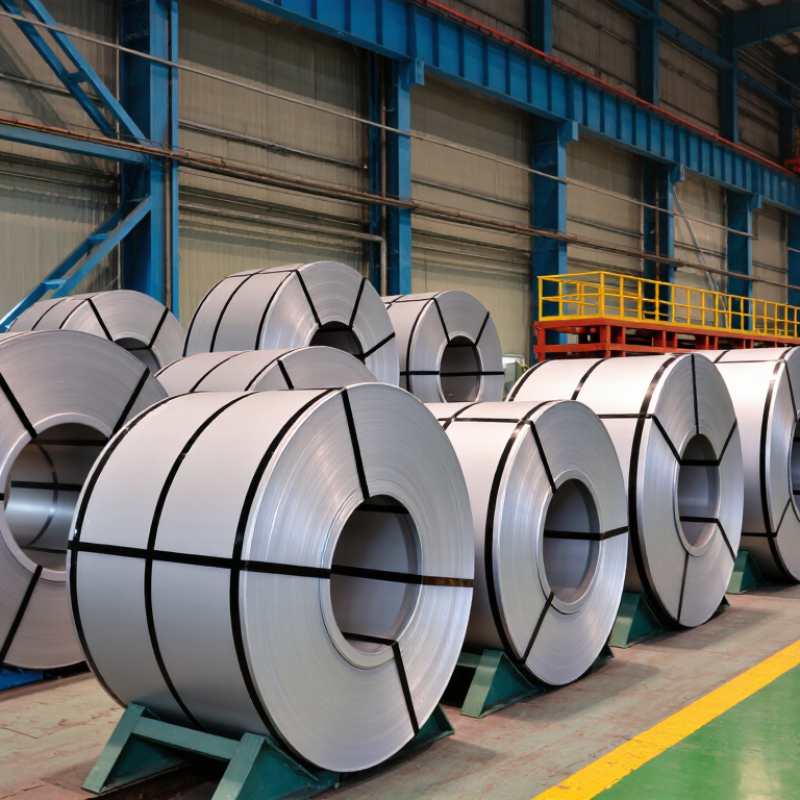
High carbon steel coil is flat steel strip wound into a tight roll, usually containing about 0.60% to 1.00% carbon by weight. The exact range can vary by standard, mill practice, and product designation. More carbon increases hardness, tensile strength, and wear resistance after heat treatment. It also reduces ductility and makes forming more demanding. That trade-off matters.
Its key characteristics become clearer during processing. A properly controlled coil can produce blades, springs, saw components, knives, wires, and wear-resistant parts. Cold rolling may improve thickness accuracy and surface quality. Annealing can soften the material for cutting or forming. Quenching and tempering then develop a harder, tougher structure. Small changes in heating temperature, cooling speed, or coil thickness can affect the final performance.
Surface condition deserves close attention. Rust stains, edge cracks, scale, and uneven coiling may create problems during stamping or slitting. Buyers should check carbon content, hardness, tensile data, dimensional tolerance, and heat-treatment condition against the applicable specification. A simple hardness test is useful, but it is not enough alone. Grain structure and internal defects may still influence service life. One practical mistake is treating every high carbon coil as interchangeable. They are not. Carbon level, alloy additions, processing history, and intended use must be reviewed together. Even a visually clean coil can fail when excessive forming exposes its limited ductility.
| No. | Common Grade or Type | Typical Carbon Content (wt.%) | Key Alloying Elements | Key Characteristics | Typical Coil Applications | Weldability and Formability |
|---|---|---|---|---|---|---|
| 1 | AISI 1045 Medium-high carbon steel | 0.43–0.50 | Mn: about 0.60–0.90 | Balanced strength, toughness, and machinability; can be induction hardened. | Shafts, axles, pins, gears, structural components, and general engineering parts. | Limited weldability compared with low-carbon steel; moderate cold formability. |
| 2 | AISI 1060 High carbon steel | 0.55–0.65 | Mn: about 0.60–0.90 | Higher hardness and wear resistance than 1045 while retaining useful toughness. | Cutting tools, knives, springs, wear plates, and components requiring a hard edge. | Poor weldability without careful preheating and post-weld control; limited cold forming. |
| 3 | AISI 1070 High carbon steel | 0.65–0.75 | Mn: about 0.60–0.90 | Good hardenability for a plain-carbon grade, high strength after heat treatment, and good wear resistance. | Flat springs, blades, agricultural tools, washers, and wear-resistant parts. | Very limited weldability; generally formed before final hardening. |
| 4 | AISI 1080 High carbon spring steel | 0.75–0.88 | Mn: about 0.60–0.90 | High strength, hardness, and elastic response after quenching and tempering. | Springs, clips, saw blades, scraper blades, and resilient components. | Not readily weldable; cold forming is normally limited to the annealed or spheroidized condition. |
| 5 | AISI 1095 Extra-high carbon steel | 0.90–1.03 | Mn: about 0.30–0.50 | Very high attainable hardness and edge retention; lower impact toughness than lower-carbon grades. | Knife blades, saw blades, scrapers, wear strips, and high-strength springs. | Extremely poor weldability; requires careful heat treatment to reduce cracking and distortion. |
| 6 | 65Mn Manganese spring steel | 0.62–0.70 | Mn: 0.90–1.20; Si: commonly 0.17–0.37 | Higher strength and hardenability than plain-carbon spring steels; good fatigue performance when properly treated. | Spring washers, leaf springs, retaining rings, agricultural blades, and clamps. | Poor weldability; moderate formability in annealed condition and low formability after hardening. |
| 7 | 60Si2Mn Silicon-manganese spring steel | 0.56–0.64 | Si: 1.50–2.00; Mn: 0.60–0.90 | Excellent elastic limit, fatigue resistance, and hardenability for spring applications. | Automotive leaf springs, coil springs, suspension parts, and high-load spring components. | Very poor weldability; hot forming and controlled heat treatment are preferred. |
| 8 | SK5 High carbon tool steel | 0.80–0.90 | Mn: about 0.10–0.50; Si: about 0.10–0.35 | High hardness and wear resistance with strong edge-holding capability after hardening. | Utility knives, shears, saw blades, cutting tools, and precision strip components. | Poor weldability; good machinability and forming are mainly available before hardening. |
| 9 | C80 EN high carbon steel | 0.75–0.85 | Mn: about 0.60–0.90; Si: about 0.10–0.40 | Good combination of hardness, strength, and wear resistance; commonly supplied as precision strip or coil. | Springs, saws, blades, clips, scrapers, and stamped wear-resistant parts. | Poor weldability; suitable for cold working when supplied annealed or in a controlled condition. |
| 10 | C100S EN extra-high carbon steel | 0.95–1.05 | Mn: about 0.30–0.60; Si: about 0.10–0.40 | Very high hardness and wear resistance after heat treatment; excellent for thin, sharp-edged components. | Industrial blades, saw components, scrapers, measuring tools, and high-wear strip parts. | Extremely poor weldability; requires controlled forming, hardening, and tempering practices. |