The Window
& Door Store

2026 Best Types of Home Doors for Global Buyers

Choosing the right home doors in 2026 requires more than comparing colors, prices, and attractive online photographs. Global buyers must consider climate, building design, security, maintenance, accessibility, and installation quality. A solid wood door may suit a dry, traditional home, but humidity can cause swelling around the frame. Fiberglass handles changing weather better. Steel offers strong protection, though scratches may eventually invite rust without proper care.

Door-industry specialist Gary Johnson offers a practical reminder: “A door must work before it looks good.” That principle guides this overview of the best home doors for different markets, climates, and budgets. We will examine entry doors, interior doors, sliding systems, French doors, fire-rated options, and smart door technologies. Each type has useful strengths and unavoidable compromises.

Details matter.

A coastal buyer may need corrosion-resistant hardware and sealed edges. A homeowner in a cold region may prioritize insulated cores and tight weatherstripping. In warmer climates, wide openings and shaded glass can improve airflow, but poorly selected glass may increase indoor heat. Buyers should also check frame measurements, hinge positions, threshold height, local installation practices, and replacement-part availability. These points are easy to overlook during international purchasing.

This guide does not treat one material as universally superior. That would be convenient, but inaccurate. Product quality varies between manufacturers, and even the best door can perform poorly after careless installation. The most reliable choice balances appearance, daily use, regional conditions, long-term upkeep, and verified technical performance.
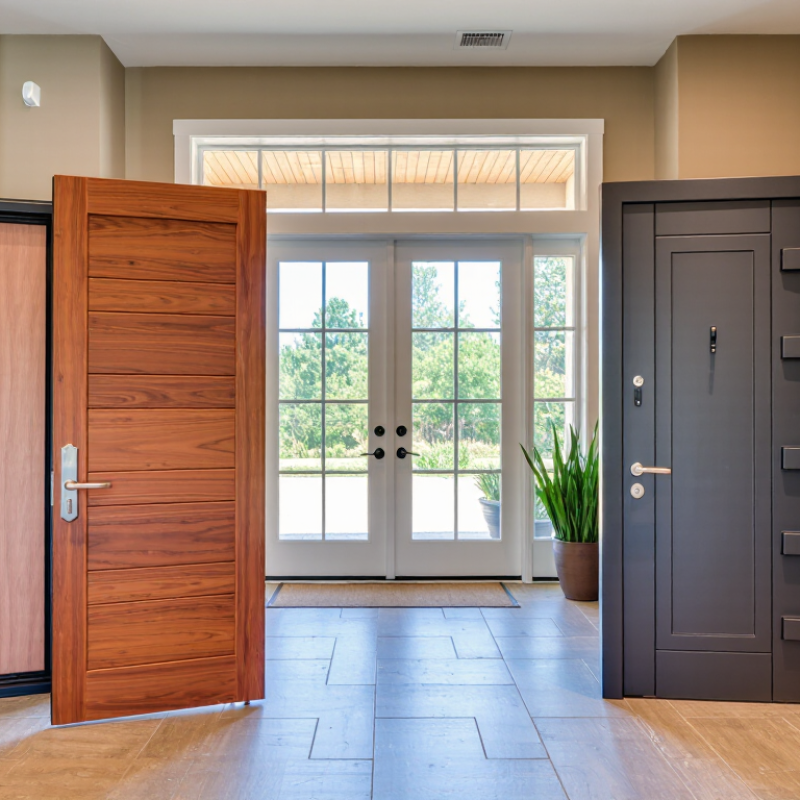
2026 Best Types of Home Doors for Global Buyers

Door Performance Basics: U-Factor, SHGC, R-Value, and Air Leakage

For global home buyers, door performance starts with four numbers: U-factor, SHGC, R-value, and air leakage. U-factor measures heat flow; lower is better. R-value shows resistance; higher is better, but door assemblies are not simple walls. SHGC measures solar heat entering through glazed areas. Air leakage records unwanted airflow under test pressure.

The U.S. Department of Energy’s Energy Saver guidance estimates that windows can cause 25–30% of residential heating and cooling energy use. Doors contribute less surface area, yet a poorly sealed entrance can create a noticeable cold draft. NFRC 100 covers U-factor and SHGC ratings, while NFRC 400 evaluates air leakage. These tests improve comparison, but field installation still matters. The imperfect truth is simple: a high-rated door can perform badly beside an uneven frame.

Tips: Compare the whole-door U-factor, not only the glass. In hot, sunny regions, choose lower SHGC glazing. In cold or windy regions, prioritize low U-factor and tested leakage. Ask for installation tolerances, threshold details, and weatherseal replacement access. Check climate-zone guidance from the U.S. Department of Energy or local building authorities. Fancy hardware cannot repair a warped frame.
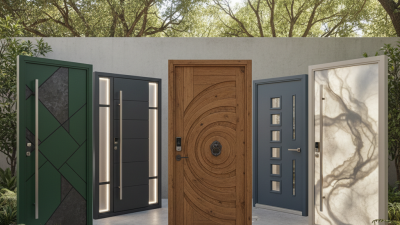
Exterior Door Materials Compared: Steel, Fiberglass, Wood, Aluminum, and uPVC

2026 Best Types of Home Doors for Global Buyers

Exterior door material affects comfort, maintenance, security, and long-term cost. The International Energy Agency reports that buildings consume about 30% of global final energy, so small envelope weaknesses deserve attention. Steel doors offer strong security and stable pricing, but damaged coatings can invite rust. Fiberglass resists moisture, dents less easily, and often performs well in humid or coastal climates. It can imitate timber convincingly, though cheaper skins may feel artificial.

Wood provides warmth, repairability, and strong architectural character. However, it needs regular sealing, especially around the bottom edge. Aluminum is light, durable, and suitable for wide openings, but non-thermal-break frames can conduct heat quickly. uPVC needs little painting and resists moisture, yet quality varies greatly in hot climates. The U.S. Department of Energy’s weatherization guidance emphasizes insulated cores, tight weatherstripping, and properly sealed frames. Material alone does not guarantee efficiency. I would not overpromise it.

Tips: Compare tested U-factor, air leakage, and water resistance, not only brochure claims. Check NFRC or equivalent regional certification where available. In coastal areas, ask for corrosion testing. In cold regions, inspect the threshold and frame connection carefully. A beautiful door with a weak installation still leaks air. That detail is easy to miss.

Climate-Based Selection Using ENERGY STAR and NFRC Rating Criteria

Choosing a home door globally requires more than appearance or material preference. Climate changes the performance equation. The International Energy Agency’s 2024 Global Status Report states that buildings consume about 30% of global final energy. A poorly sealed entrance can quietly increase heating or cooling demand.

Use ENERGY STAR criteria as a screening tool, then inspect the NFRC label. In cold climates, prioritize a low U-factor, which indicates better resistance to heat loss. In hot, sunny regions, a lower solar heat gain coefficient can reduce unwanted indoor heat. NFRC also reports visible transmittance and air leakage, although air leakage matters greatly around the frame and threshold. Small gaps are not small in winter.

Coastal buyers should examine moisture resistance, corrosion-resistant hardware, and durable weatherstripping. Hot-humid regions need careful control of rain penetration and condensation. ENERGY STAR guidance supports climate-specific selection rather than one universal specification. That matters.

A practical installation test is simple: stand inside on a windy day and inspect the bottom seal. Still, field conditions can expose weaknesses that laboratory ratings cannot predict. NFRC ratings compare tested products, not every installation detail. Door orientation, shading, wall construction, and local workmanship can change results. I would not choose a door from its U-factor alone. That is an easy mistake. Reliable selection combines certified performance data, regional climate demands, and a realistic inspection of the opening.

Security and Fire Safety: EN 1627 Resistance Classes and UL 10C Ratings

For global home buyers, a secure door must resist intrusion and control fire risks. These are different performance questions, so one rating cannot replace another.

EN 1627 classifies complete door sets from RC1N to RC6. The test considers the door leaf, frame, lock, hinges, glazing, and installation. Lower classes address basic attacks with simple tools. Higher classes simulate stronger tools, greater force, and longer attack times. A well-designed RC3 or RC4 entrance door may suit many exposed homes, but location and threat levels still matter. Check the complete doorset certificate, not only the lock label.

UL 10C evaluates fire door assemblies under positive pressure. It measures whether the assembly limits flame and hot gases for a stated period, such as 20, 45, 60, or 90 minutes, depending on the approved design. Fire-rated glazing, seals, frame, closer, and hardware must match the tested configuration. Small installation changes can weaken performance. That is easy to overlook.

Security and fire safety can conflict. Extra reinforcement may affect weight, closing force, or emergency operation. In my experience, buyers often focus on a heavy door and miss the frame or threshold. That is an expensive lesson. Certification also depends on local approval rules and proper installation. Ask for test evidence, maintenance instructions, and a clear rating for the entire assembly. No door performs well when it is poorly fitted.

2026 Best Types of Home Doors for Global Buyers — Security and Fire Safety

EN 1627 resistance classes and UL 10C fire-resistance ratings

EN 1627 values indicate the nominal manual attack time used to classify burglary resistance. UL 10C values indicate common fire-door exposure ratings in minutes. These test durations measure different performance characteristics and are not direct equivalents; actual door selection should also consider the complete door assembly, lockset, glazing, frame, installation, and local code requirements.

Global Buying Matrix: Cost, Lifespan, Maintenance, and Installation Standards

2026 Best Types of Home Doors for Global Buyers

A global buying decision should compare more than the purchase price. Steel doors often offer strong security and long service life, but coastal air can accelerate corrosion without proper coatings. Fiberglass doors usually resist moisture, insects, and warping. They cost more than basic steel models in some markets. Solid wood provides warmth and repairability, yet it needs regular sealing, especially in humid climates. Aluminum and glass systems suit modern homes, but thermal performance depends heavily on frame design and glazing.

A useful matrix should record supply cost, shipping, installation labor, expected lifespan, and yearly maintenance. Fiberglass may last 20–30 years with limited upkeep. Quality steel can perform for decades, but damaged finishes need prompt repair. Wood may last equally long when maintained, though neglected edges can swell within one wet season. These figures are practical estimates, not promises. Local weather changes everything. Installation must follow regional building codes, including fire ratings, emergency egress, accessibility, wind resistance, water control, and insulation requirements. A familiar door is not always compliant abroad.

Tips: Request written performance data and local installation details. Check the rough opening before ordering. Ask who handles adjustments after settlement or seasonal movement. Inspect hinges, seals, thresholds, and drainage paths. One overlooked threshold can cause years of leaks. I have seen buyers focus on the slab and ignore labor quality. That mistake is expensive. Also, imported hardware may not match local repair systems, so availability deserves a place in the matrix.

2026 Best Types of Home Doors for Global Buyers - Global Buying Matrix: Cost, Lifespan, Maintenance, and Installation Standards

Exterior-door benchmark for a typical single-leaf entrance door approximately 900 × 2,100 mm. Costs are indicative 2026 global-market ranges in USD and vary by country, glazing, hardware, security level, labor, taxes, and opening modifications.

Door Type Typical Installed Cost
(USD)
Expected Service Life Thermal Performance Weather Resistance Maintenance Requirement Main Advantages Main Limitations Installation and Compliance Checkpoints
Fiberglass Composite $800–$2,800 30–50 years ★★★★★
Low heat transfer; insulated cores are widely available.
★★★★★
Very good resistance to moisture, swelling, and corrosion.
Low. Clean periodically; inspect seals and repaint or refinish when the coating manufacturer requires it. Stable in humid or coastal climates; good insulation; realistic wood-grain finishes; relatively low upkeep. Can cost more than basic steel or uPVC; surface damage may require specialist repair. Verify frame squareness, sill drainage, perimeter air sealing, weather flashing, threshold height, and local energy-performance requirements. Use safety glazing where glass is installed.
Insulated Steel $500–$1,800 30–50 years ★★★★☆
Good performance when fitted with a continuous insulated core.
★★★★☆
Good when factory-coated and protected from standing water.
Low to medium. Repair scratches promptly to prevent rust; lubricate hardware and replace worn weather seals. Strong security-to-cost ratio; stable dimensions; good fire-door options; widely available. Can dent; exposed edges may corrode in salt air or persistently wet conditions; thermal bridging is possible. Protect cut edges, use corrosion-resistant fixings in coastal areas, install a drained sill, and confirm door-and-frame fire ratings where required. Follow local structural, egress, and energy codes.
Solid Hardwood $900–$3,500+ 30–75+ years with proper care ★★★☆☆
Moderate; performance improves with a well-insulated core or storm-door system.
★★★☆☆
Highly dependent on species, finish, overhang, and local humidity.
Medium to high. Recoat exposed faces and edges; check for movement, moisture damage, and seal compression. Natural appearance; repairable and refinishing-friendly; suitable for custom sizes and traditional architecture. May expand, contract, warp, or split if moisture is not controlled; heavier and usually more expensive to install. Seal all six surfaces, especially the bottom edge; provide adequate head protection in wet climates; allow correct clearances; verify hinge capacity, threshold drainage, air leakage, and local energy requirements.
Engineered Wood $600–$2,200 20–40 years ★★★★☆
More dimensionally stable than many solid-wood constructions.
★★★☆☆
Good with durable exterior skins and properly sealed edges.
Medium. Inspect coatings, joints, seals, and bottom edges; refinish according to exposure conditions. Wood appearance with improved dimensional stability; broad design flexibility; often lighter than solid wood. Quality varies significantly by core and outer veneer; water intrusion can damage unprotected layers. Keep the door plumb and square, seal all exposed edges, use compatible adhesives and finishes, provide sill flashing, and check regional wind, water, air, and thermal-performance requirements.
uPVC / Vinyl $700–$2,200 25–40 years ★★★★☆
Good insulation with multi-chamber profiles and insulated panels.
★★★★☆
Good resistance to moisture and routine weather exposure.
Low. Wash with mild detergent; keep drainage paths clear; adjust hinges and locking points when needed. Low maintenance; moisture resistant; competitive installed cost; good air-sealing potential. Can discolor or become brittle under severe ultraviolet exposure; limited repairability; expansion must be accommodated. Allow manufacturer-specified thermal movement, fix through reinforced frame zones, maintain drainage paths, and verify local requirements for air leakage, water penetration, wind load, glazing safety, and emergency egress.
Aluminum-Framed Glass $1,000–$4,000+ 30–50 years ★★★☆☆
Thermally broken frames and low-emissivity insulated glass substantially improve performance.
★★★★☆
Strong weather performance when correctly drained and sealed.
Low to medium. Clean glass and tracks; inspect gaskets, sealants, drainage holes, and powder-coated surfaces. Modern appearance; large glazed areas; corrosion-resistant finishes; good daylight and visibility. Non-thermally broken frames can create condensation and heat loss; glass increases cost and security considerations. Use safety glazing in hazardous locations, select insulated glass for the climate, provide sill drainage and compatible sealants, and verify wind-load, solar-control, thermal, accessibility, and egress requirements.
Composite Polymer / Wood-Fiber $1,000–$3,500 30–50 years ★★★★★
Typically combines an insulated core with low-conductivity skins.
★★★★☆
Generally strong moisture resistance, subject to product construction and coating.
Low. Clean surfaces, inspect gaskets and hardware, and repair coating or sealant damage. Good balance of insulation, security, design options, and reduced dimensional movement. Higher initial cost; difficult to modify on site; replacement components may be product-specific. Install the complete tested door-set where possible; maintain frame alignment, threshold drainage, perimeter sealing, and required fire, security, acoustic, thermal, and accessibility classifications.
Hollow-Core Interior Door $150–$600 10–25 years indoors ★☆☆☆☆
Not intended for exterior weather exposure or high thermal performance.
★☆☆☆☆
Suitable for dry interior locations only.
Low. Clean gently; repair edge damage and adjust hinges or latch hardware. Lightweight, economical, and easy to install for bedrooms, closets, and other interior rooms. Low impact resistance, limited sound reduction, and unsuitable for exterior, wet, or security-critical openings. Confirm the required clear opening, swing direction, privacy or accessibility needs, and fire rating. Fire-rated openings must use a compatible certified door, frame, hardware, and closer assembly.
Global installation reference: Requirements differ by jurisdiction. Buyers should check the locally adopted building, energy, wind-load, fire, accessibility, security, and egress regulations. Common regional reference frameworks include EN 14351-1 for external pedestrian doorsets in applicable European markets, AS 2047 in Australia, applicable CSA/AAMA/WDMA standards in North America, and relevant national standards in Asia and other regions. A standard reference does not replace local code approval or the manufacturer’s tested installation instructions.

Cost basis: Ranges represent typical supply and professional installation for one standard-size exterior door, excluding major wall alterations, structural reinforcement, premium access-control systems, taxes, permits, and unusual freight. Actual service life depends on climate, exposure, installation quality, usage frequency, hardware quality, and maintenance.