The Window
& Door Store

How to Find Cheap Patio Doors from Global Suppliers?

Finding cheap patio doors from global suppliers can reduce project costs, but the lowest quote rarely tells the whole story. A door priced at 180 dollars may require expensive freight, reinforced packaging, import duties, and local installation. I learned this after comparing several factory offers. One attractive quotation excluded glass upgrades and corner protection. The final cost changed quickly.

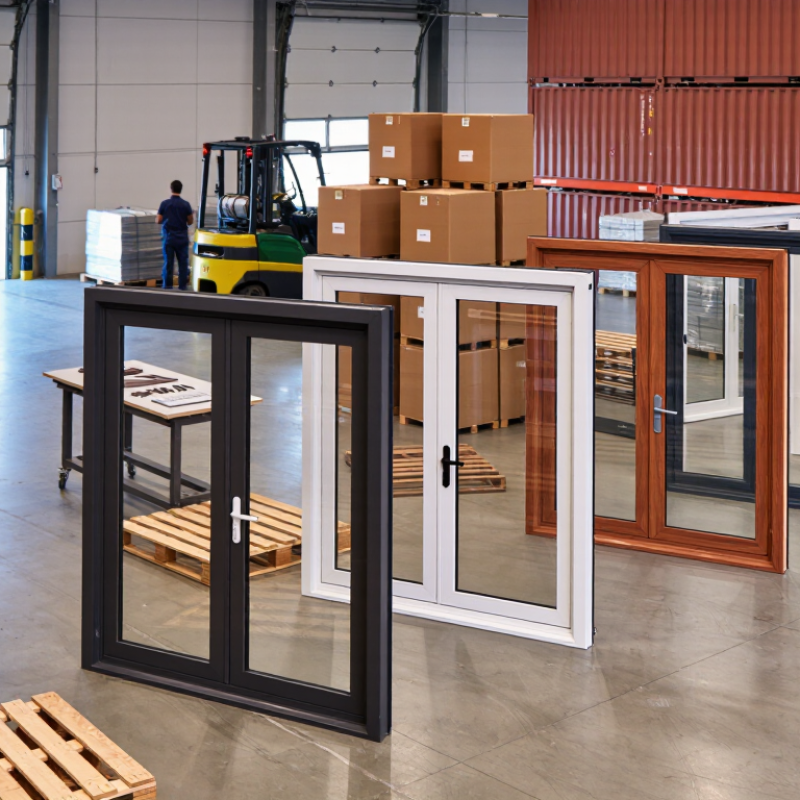
A reliable sourcing process starts with clear specifications. Measure the opening accurately, including wall thickness, frame depth, handing, glass type, color, and locking system. Ask suppliers for product drawings, test reports, warranty terms, and recent production photos. Check whether the doors meet applicable safety, energy-efficiency, and building requirements in the destination market. Standards vary by region. A supplier’s certificate should be verified, not simply trusted because it appears professional.

Request samples when possible. A small sample can reveal sliding resistance, frame finish, seal quality, and handle strength. It also exposes details that photographs often hide. Compare factory prices with landed costs, including shipping, insurance, customs charges, inspection, and replacement parts. Payment protection and written contracts matter as much as product price. Never ignore communication quality. Slow or vague replies may become serious problems after payment.

The goal is not merely to locate cheap patio doors. It is to find doors that remain affordable after delivery and installation. Some assumptions will be wrong. That is normal. Careful comparison, documented questions, and independent verification create a more dependable purchasing decision. A cheaper door is useful only when it performs safely, arrives intact, and fits the project without costly surprises.
How to Find Cheap Patio Doors from Global Suppliers?

Set a Target Price Using ENERGY STAR® U-Factor ≤0.30 and SHGC ≤0.40

How to Find Cheap Patio Doors from Global Suppliers?

Set your target price around performance, not the lowest factory quote. For energy-efficient patio doors, request a whole-unit U-factor of 0.30 or lower and SHGC of 0.40 or lower. These figures help compare insulation and solar heat control. Do not accept center-glass data alone. It can make a door look better than it performs.

Ask suppliers for independent test reports, product drawings, frame material details, and warranty terms. Confirm whether the quote includes hardware, packaging, inland delivery, ocean freight, duties, and local transport. A low unit price may become expensive after these costs. Specify your climate, rough opening size, glass configuration, and preferred installation method. Experienced suppliers should provide clear data, not vague promises.

Tips: Create a comparison sheet with U-factor, SHGC, air leakage, dimensions, and landed cost. Request one sample or a detailed mock-up before placing a large order. Check seals, rollers, locks, and corner joints by hand. Small defects matter. I have seen attractive quotations fail because the supplier used different test conditions. That mistake is easy to overlook, and the specification may need revision after testing. Performance targets should remain fixed, while cosmetic options can be adjusted to control cost. Verify regional energy requirements before purchase, because ENERGY STAR criteria and labeling rules may vary by market.


Compare Landed Costs: Unit Price, MOQ, Freight, Duty, and Contingency

Finding cheap patio doors starts with landed cost, not catalog price. In sourcing projects, I have seen a low unit quote become expensive after delivery. Ask suppliers for aluminum or uPVC specifications, glass thickness, hardware grade, and packaging details. Then compare equivalent products. A cheaper frame may use thinner sections or weaker seals. That difference can affect installation time and service life. Request a sample or detailed drawings before placing a large order. Photos are not enough.

Build a landed-cost sheet for every quotation. Include unit price, MOQ, inland pickup, ocean or air freight, insurance, customs duty, broker fees, port handling, and final delivery. Freight can change sharply with door dimensions because volume often matters more than weight. Divide all charges by the sellable number of units. A 100-unit MOQ may look attractive, but slow inventory can tie up cash. Contingency deserves its own line, perhaps 5–10 percent for damage, currency movement, or rework. That range is not universal.

Tips: Ask for two freight scenarios: a busy-season estimate and a conservative estimate. Confirm whether duties use product value, freight, or both. Check carton dimensions carefully. One overlooked centimeter can change container planning. Keep written records of every assumption. My own estimates have been wrong when suppliers used different packing measurements. Recheck them before payment.

Screen Global Suppliers with ISO 9001, Factory Audits, and MOQ Evidence

How to Find Cheap Patio Doors from Global Suppliers?

Low pricing starts with disciplined supplier screening, not the lowest quotation. The ISO Survey 2022 recorded 1,265,216 ISO 9001 certificates across 189 economies. This shows broad adoption, but certification alone proves little about patio-door quality. Ask for the certificate number, factory address, approved scope, and latest surveillance date. Confirm these details through the certification body’s public records.

Request an independent factory audit before negotiating volume. Check glass handling, frame assembly, powder-coating thickness, drainage tests, and final inspection records. A useful audit should include dated photographs and production capacity by month. It should also verify whether the audited site matches the exporter’s legal documents. Small details matter. A polished showroom can hide weak quality controls.

MOQ evidence should be practical, not verbal. Request recent production schedules, carton counts, pallet dimensions, and invoices with sensitive prices removed. Compare the quoted MOQ with line capacity and container utilization. For example, a supplier claiming a 500-door MOQ should explain how many doors fit in a 40-foot container. The World Bank’s Logistics Performance Index 2023 highlights major differences in shipment reliability between markets, so delivery assumptions deserve written proof. I would still keep a pilot order. Audits can miss seasonal labor changes, and ISO systems may not reflect every production shift. Cheap doors become expensive when replacements, delays, and damaged glass appear.

How to Find Cheap Patio Doors from Global Suppliers? - Screen Global Suppliers with ISO 9001, Factory Audits, and MOQ Evidence

Screening Dimension Evidence or Data Required Acceptable Benchmark Verification Method Procurement Risk
Quality management system Current ISO 9001 certificate showing the legal manufacturing entity, site address, scope, certificate number, issue date, and expiry date. Certificate is current, covers door or window manufacturing, and applies to the actual production site. Check the certificate with the issuing certification body or its official certificate database. High if the document is expired, unverifiable, or issued to a different entity.
Factory identity Registered company name, factory address, production photos, business license, and contact details. All documents identify the same legal entity and physical production location. Compare corporate registration records, certificate data, shipping documents, and live video or third-party inspection evidence. High when the supplier appears to be a trading intermediary without disclosed factory control.
Factory audit Recent independent audit report covering production capacity, quality control, labor practices, safety, and corrective actions. Audit completed within the last 12 months with no unresolved critical findings. Request the full report, auditor identity, audit date, scope, photographs, and closure evidence for nonconformities. Medium to high if only edited screenshots or self-assessment forms are supplied.
Minimum order quantity MOQ stated separately for standard sizes, custom sizes, custom colors, and special glass configurations. MOQ is quoted in pieces and matches the requested specification, packaging, and Incoterm. Obtain a signed quotation and pro forma invoice showing quantity, unit price, tooling charges, and sample terms. Medium if a low advertised MOQ applies only to unrequested standard products.
Price comparability Itemized quote covering door size, frame material, glass, hardware, finish, packaging, tooling, freight, duties, and taxes. At least three comparable quotations based on identical specifications and the same delivery term. Normalize each offer to the same dimensions, glazing, currency, Incoterm, destination, and order quantity. High when an apparently low unit price excludes freight, hardware, packaging, or export charges.
Frame material and finish Material grade, profile drawings, wall thickness, coating specification, color reference, and finish warranty. Specification is clearly stated and supported by technical drawings and finish-control records. Review drawings, sample cross-sections, coating documentation, and a pre-shipment inspection checklist. Medium if material thickness or coating performance is omitted from the quotation.
Glass specification Glass type, thickness, safety treatment, spacer, gas fill where applicable, and performance documentation. The glazing configuration is written into the purchase order and complies with the destination market’s building requirements. Check glass markings, inspection records, test reports, and shipment samples before mass production. High when “double glass” or “tempered glass” is stated without thickness or test evidence.
Air, water, and wind performance Test reports for air leakage, water penetration, structural performance, and operation or cycle testing. Reports identify the tested product configuration and laboratory; performance meets the destination code or project specification. Confirm the report matches the final profile, glass, hardware, dimensions, and opening direction. High if a report covers a different model or only lists laboratory accreditation without test results.
Hardware and spare parts Hardware specification, corrosion protection, replacement-part list, lead time, and warranty procedure. Critical rollers, locks, handles, seals, and fasteners are identified and available for after-sales replacement. Request a hardware schedule, spare-parts quotation, and written response-time commitment. Medium if proprietary components cannot be replaced locally or ordered separately.
Sample and pre-shipment control Approved production sample, dimensional checklist, packaging plan, and independent pre-shipment inspection option. Mass production cannot begin until the sample and key specifications are approved in writing. Use signed approval drawings and inspect quantity, dimensions, finish, glass, operation, labels, and packaging before dispatch. High when the supplier refuses independent inspection or changes specifications after deposit.
Landed-cost calculation Product price, export packing, inland transport, ocean or air freight, insurance, customs duties, taxes, brokerage, and local delivery. The buying decision is based on total landed cost rather than the factory unit price alone. Calculate the delivered cost for the actual order quantity and destination, then compare it with local alternatives. High if freight, breakage risk, duties, or installation costs make the delivered price uncompetitive.
Recommended screening rule: Shortlist suppliers only after the ISO 9001 certificate, factory identity, MOQ quotation, comparable landed-cost offer, and product-specific test or inspection evidence have been independently checked.

Verify AAMA/WDMA/CSA 101 Reports for Air, Water, and Structural Tests

How to Find Cheap Patio Doors from Global Suppliers?

Low prices can hide weak testing records. I have reviewed supplier quotations where “tested” meant only an internal inspection. Request the complete AAMA/WDMA/CSA 101/I.S.2/A440 report, not a marketing certificate. This standard evaluates air leakage, water penetration, and structural performance. Check the exact model, frame material, glass package, dimensions, and test laboratory. A report for a small sliding door may not support a larger door configuration. Details matter.

The U.S. Department of Energy reports that windows and doors can account for roughly 25% to 30% of residential heating and cooling energy use. Poor air control may increase drafts and operating costs. Ask for air-leakage results from ASTM E283, water-testing results from ASTM E331 or E547, and structural results from ASTM E330 when listed. Compare the values, test pressures, and allowable limits. A pass result is useful, but it is not a promise of perfect site performance. Installation can still fail.

Tips: Ask for the report number, issue date, laboratory accreditation, and tested size. Confirm whether the supplier can repeat the same configuration. Do not accept edited screenshots. A missing page is a warning. Also inspect drainage paths, corner joints, rollers, and weather seals in product samples. I would not choose the cheapest quote without these checks. Saving money here can become an expensive replacement later.

How to Find Cheap Patio Doors from Global Suppliers?

Verify AAMA/WDMA/CSA 101 reports for air, water, and structural tests before comparing prices.

The reference checkpoints shown are based on AAMA/WDMA/CSA 101/I.S.2/A440 testing conventions: air leakage is tested at 75 Pa, water penetration uses a minimum reference pressure of 140 Pa where applicable, and structural testing is commonly conducted at 1.5 times the designated design pressure. Actual requirements vary by product type, performance class, size, design pressure, and standard edition. Ask suppliers for complete laboratory reports, product identification, test pressure, pass/fail results, and report dates.

Order Samples, Complete Pre-Shipment Inspection, and Confirm Warranty Terms

How to Find Cheap Patio Doors from Global Suppliers?

Low prices can hide costly defects. Order a physical sample before approving bulk production. Check the frame corners, glass edges, drainage holes, seals, rollers, and locking points. Measure the sample yourself, not only from the supplier’s drawings.

The U.S. Department of Energy reports that windows can cause 25–30% of residential heating and cooling energy use. Patio doors may influence comfort more than their price suggests. Ask for documented U-values, air leakage results, water resistance, and wind-load performance. Local climate matters.

Tips: Compare the same specifications. Do not compare prices alone.

A pre-shipment inspection should happen after production, before final payment. Use an independent inspector when distance prevents direct supervision. The inspection should verify dimensions, color, glass thickness, hardware quantity, packaging strength, and operating force.

Photograph every carton and record serial or batch details. I would not accept “passed” as enough evidence. Request measurable results and a signed report. A small defect can become a large installation problem. Still, inspection is not perfect; hidden glass damage may appear after delivery.

Confirm warranty terms in writing. Clarify coverage periods for frames, hardware, seals, finish, and insulated glass. Ask who pays replacement freight and installation labor. Require a clear claims process, response time, and remedy.

The World Trade Organization’s trade facilitation guidance emphasizes predictable documentation and procedures. That principle also helps private purchasing. Cheap doors are useful only when quality, inspection, and after-sales obligations remain visible.