Home / Blog
China offers a wide range of premium doors, from solid-wood entry doors to modern interior systems with slim frames and concealed hinges. Yet “best” depends on the project. A hotel renovation may prioritize fire-rated specifications and consistent supply, while a private home may focus on wood grain, acoustic comfort, and finish. The right search starts with clear requirements, not a glossy catalogue.
This guide looks at where buyers can explore China’s door market, including manufacturer showrooms, factory visits, and established sourcing platforms. It also explains how to compare suppliers beyond price. Ask about the door core, veneer thickness, hardware brands, surface treatment, and available test reports. Request a physical sample. Check how the finish looks in daylight, and inspect the edge details closely. Small clues count.
Reliable sourcing takes verification. Confirm that product documents match the exact model, and clarify packaging, lead times, installation support, and after-sales terms in writing. A factory visit can reveal useful details, but a polished showroom alone proves little. That is easy to forget. Photos, samples, and third-party inspections each have limits, so use them together when the order matters. No checklist catches everything; even experienced buyers can overlook a detail when schedules are tight. The pages ahead offer practical ways to compare options, ask better questions, and choose premium doors with fewer surprises.
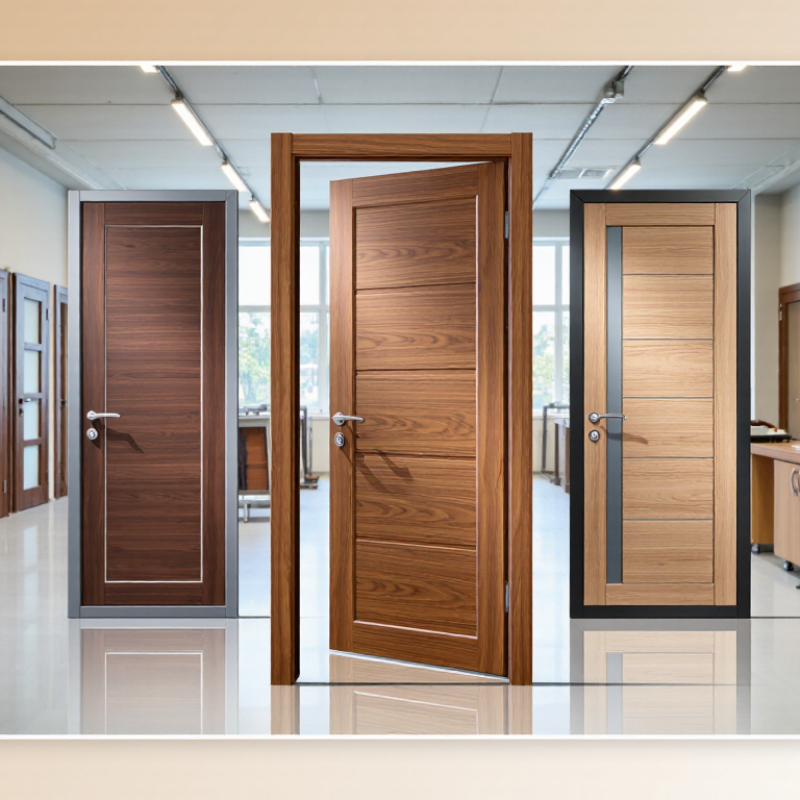
A premium door in China is defined by more than a polished surface or a high price. Its core, frame, and edge construction should feel consistent, with no loose joints or uneven gaps. Check how the door closes: it should sit squarely, latch smoothly, and meet its seals without scraping. Details matter. A carefully finished edge also helps protect against moisture and everyday wear, especially in humid regions.
Ask what materials are used and request test records for relevant performance, such as sound reduction or durability. In areas with changing temperatures or humidity, dimensional stability matters as much as appearance. A heavier door is not automatically better; its weight must suit the frame and hinges. Not always. Inspect the hardware, too: handles should feel secure, and hinges should operate quietly.
Installation can affect the result as much as the door itself, so check the finished opening for even reveals and smooth movement. There is no single ideal specification for every home. A practical choice balances construction, local conditions, maintenance, and documented performance.

China’s premium-door manufacturers are concentrated in several distinct production belts. Foshan, Guangdong, is a useful base for comparing finished doors, hardware, and surface treatments within a short sourcing trip. Zhejiang has different strengths: Yongkang is known for metal doors, while Jiangshan has a strong wooden-door manufacturing cluster. These are starting points, not guarantees of quality. Factory capability varies, even within the same city.
The National Bureau of Statistics reported that China’s furniture manufacturing sector recorded 655.7 billion yuan in operating revenue in 2023. This figure covers furniture, not doors alone, so it indicates industry scale rather than ranking door-producing regions. The distinction matters. For buyers, regional concentration can make it easier to inspect factories and compare suppliers, but brochures rarely reveal core construction or finish durability. Ask to see production areas, sample corners, and test records. I would also check whether the quoted factory actually makes the door or outsources key steps. That detail is easy to miss.
In China, premium doors are offered by several supplier types, each suited to different project needs. Large door manufacturers usually provide stable production capacity and a broad range of finishes. They may offer solid wood, engineered wood, or fire-rated options. Ask for clear construction details, including core material, veneer thickness, edge treatment, and hardware specifications. Details matter.
Specialist door makers focus on custom dimensions, acoustic performance, or distinctive finishes. They can be a good fit for hotels and high-end homes, where standard sizes may not work. Request a physical sample and compare its color under natural and indoor light. A polished sample alone is not proof of consistent production.
Trading companies can coordinate multiple product categories and handle communication, but buyers should confirm who actually manufactures the doors. Showrooms help compare finishes and examine how hinges, seals, and frames fit together. Smaller joinery workshops may deliver careful custom work, though their production capacity can be limited. That matters. Before ordering, review written specifications, production photos, lead times, and the supplier’s process for checking finished goods. A little uncertainty may remain, so independent inspection can be worthwhile for large orders.
Premium doors in China are available through several supplier types. The right option depends on the project’s design requirements, materials, performance standards, order volume, and need for installation or export support.
| Supplier Type | Typical Premium Door Offerings | Potential Strengths | What to Verify | Often Suitable For |
|---|---|---|---|---|
| Door manufacturers | Solid-wood, engineered-wood, flush, and panel doors; selected factories also produce metal or composite models. | Direct access to production, material options, and factory quality-control processes. | Construction details, material specifications, finish samples, tolerances, inspection procedures, and production capacity. | Buyers seeking factory-direct sourcing or repeat orders. |
| Custom door and joinery workshops | Made-to-measure interior doors, matching frames, trim, wall panels, and coordinated finishes. | Greater flexibility for non-standard dimensions, project-specific designs, and coordinated interiors. | Shop drawings, measurement responsibility, sample approval, hardware compatibility, and installation arrangements. | Villas, apartments, hotels, and renovation projects with bespoke design needs. |
| Architectural door-system suppliers | Complete door sets, which may include the leaf, frame, seals, hinges, locks, and specified fire- or sound-control components. | System-based specifications and a more coordinated approach to performance components. | Applicable test reports and certificates, tested assembly details, local code requirements, and installation instructions. | Commercial buildings and projects with documented safety or acoustic requirements. |
| Specialist metal and security-door manufacturers | Steel, aluminum, or other metal doors; selected product lines include security, fire-rated, or exterior doors. | Experience with metal fabrication, reinforced construction, and project-specific hardware options. | Door-set test evidence, corrosion protection, hardware ratings, dimensions, and suitability for the intended environment. | Building entrances, service areas, and projects requiring specified security or fire performance. |
| Export-oriented suppliers and trading companies | Sourced door products from one or more factories, with options for mixed orders and export coordination. | May assist with communication, consolidated purchasing, packing, and shipping documentation. | Actual production source, product specifications, sample consistency, quality responsibilities, Incoterms, and warranty terms. | Overseas buyers who value sourcing and logistics coordination. |
| Door hardware and component suppliers | Hinges, locks, handles, seals, closers, and other components that can be specified with a door package. | Useful for matching hardware to door weight, use, finish, and performance requirements. | Compatibility, material and finish specifications, load ratings where applicable, and replacement-part availability. | Projects that need coordinated hardware or replacement components. |
Procurement tip: Compare complete door-set specifications rather than appearance alone. Request written details on core and facing materials, dimensions, finish, hardware, packaging, applicable test documentation, lead time, inspection, and warranty before placing an order.
Where to Find the Best Premium Doors in China?
How to Evaluate Door Quality and Supplier Credentials
A premium door should perform well, not just look impressive in a showroom. The 2024 Global Status Report for Buildings and Construction, published by UNEP and GlobalABC, estimates that buildings and construction used 32% of global energy and produced 34% of energy-related CO₂ emissions in 2023. That makes insulation and airtightness worth checking. Ask for test reports showing thermal transmittance, air leakage, water resistance, and sound insulation. Confirm that the tested model matches the proposed frame, glass, hardware, and installation details. Small changes matter.
For Chinese suppliers, check business registration, manufacturing capacity, quality-control procedures, and warranty terms. Request reports from an appropriately accredited laboratory, and verify the report number, test date, product configuration, and applicable standard. GB/T 8478-2020 covers building windows and doors; confirm which requirements apply to your project. A certificate alone is not proof of consistent production. Factory audits and batch inspections can reveal gaps, though they take time. I would not rely on polished samples alone.
Tips: Compare like with like. Ask for a recent production sample, inspect corner joints and seals, and clarify who handles installation-related defects. Keep written records.
For hotels and serviced apartments, source doors as part of a complete package, not as isolated panels. Confirm the leaf, frame, hinges, locks, seals, and finish are compatible. Ask for shop drawings showing opening sizes and hardware locations before production. Details matter.
For offices and public buildings, define performance needs early. Sound reduction, durability, and fire ratings should match the project specification. Request current test reports and check that they apply to the proposed door construction. A polished sample is useful, but it cannot prove consistent production. Ask how the supplier controls dimensions, surface finish, and packing across a full order.
For homes and renovation projects, provide measured openings, wall thickness, and clear photos of site conditions. Discuss whether the doors will be shipped assembled or as separate components, and confirm lead times, protective packaging, and replacement-part options. If possible, review a production sample under natural and indoor lighting; colors can shift. One detail is easy to miss: installation tolerances vary between sites. Agree on acceptable adjustments before confirming quantities. Keep specifications and approvals in writing, especially when several project teams are involved.