What will define the best premium doors in 2026? The answer will extend beyond polished finishes and impressive price tags. Buyers increasingly expect security, energy efficiency, acoustic comfort, durability, and responsible material choices in one complete system.
Recent industry research supports this shift. Grand View Research identifies stronger demand for energy-efficient and technologically advanced doors across the global market. Fortune Business Insights also highlights renovation activity, smart-home adoption, and construction growth as important market drivers. These reports do not measure every premium door equally. That limitation matters. A luxury entrance may look exceptional, yet perform poorly when its frame, hardware, or installation is neglected.
Performance begins at the threshold.
Gary Katz, a respected door-industry educator and editor, has often emphasized a practical truth: “A door is only as good as its installation.” That principle remains highly relevant for 2026. Even a thermally broken aluminum door can lose efficiency through poor sealing. A solid timber door can warp without correct moisture control. A biometric lock can become a weakness when software updates and access policies are ignored.
The most promising premium doors will combine engineered materials, tested resistance, quiet operation, and repairable components. Expect larger glass panels, concealed hinges, multipoint locks, recycled metals, and connected entry systems. However, technology should not replace judgment. Some smart features create maintenance demands that homeowners underestimate.
This guide examines the strongest premium doors for 2026, comparing materials, security ratings, insulation, design flexibility, lifecycle value, and installation realities. The best choice may not be the most expensive one. It should be the most suitable one.
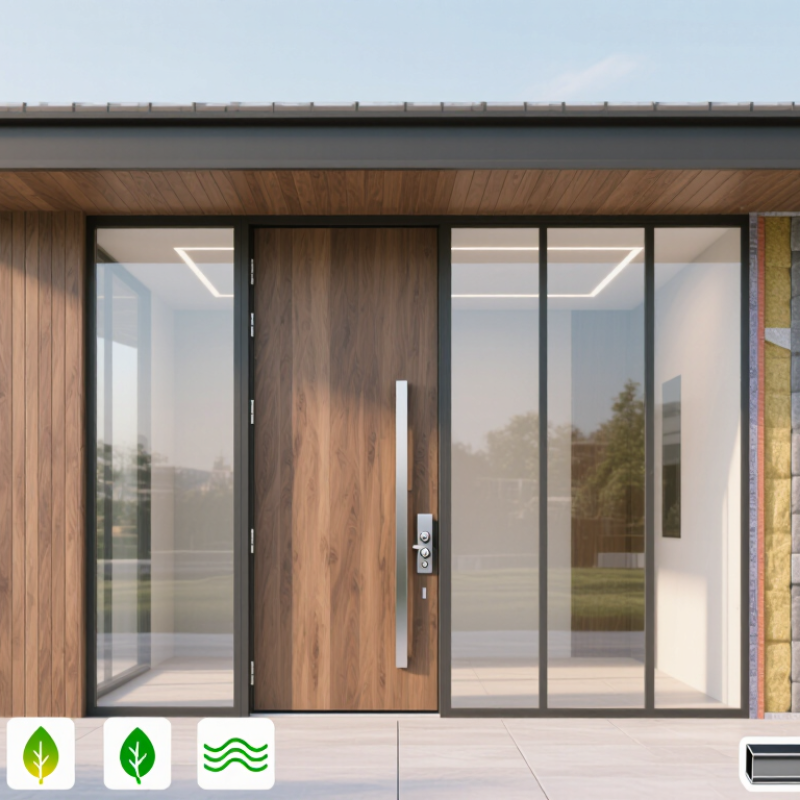
Premium doors in 2026 should mean more than expensive finishes. They combine tested performance, long service life, accessibility, and careful detailing. A solid core, stable frame, reliable seals, and low-maintenance hardware can matter more than decorative metalwork. That is the test.
The UNEP Global Status Report for Buildings and Construction 2024 states that buildings and construction consumed 32% of global energy and produced 34% of global carbon dioxide emissions in 2022. This places doors within a larger architectural responsibility. Well-designed entrances can reduce air leakage, support thermal comfort, and improve acoustic privacy. In dense housing, hospitals, and offices, these benefits are practical, not cosmetic. Designers should request verified U-values, acoustic ratings, fire performance, and documented material declarations. Details matter.
Premium doors also shape how people experience buildings. A balanced door, clear threshold, soft closing action, and visible natural texture can make arrival feel calm and inclusive. The 2024 Global Status Report also emphasizes whole-life carbon reduction, yet many specifications still focus mainly on purchase price. That approach is incomplete. A highly polished door may fail when hinges loosen, coatings weather, or replacement parts disappear. For 2026 architecture, premium quality should therefore include repairability, adaptable components, responsible sourcing, and honest performance data. The category remains fuzzy. Better testing and post-occupancy feedback can make it more credible.
| Premium Door Type | Typical Frame and Panel Materials | Indicative Thermal Performance | Indicative Acoustic Performance | Best Architectural Applications | Key Premium Features | 2026 Design and Sustainability Role |
|---|---|---|---|---|---|---|
| Thermally Broken Aluminum Entrance Door | Powder-coated or anodized aluminum frame with insulated metal, timber, or glass-reinforced panels | Approx. U-value: 0.8–1.5 W/m²K | Approx. 35–45 dB Rw | Contemporary villas, offices, hotels, cultural buildings, and high-traffic entrances | Large-format leaves, concealed hinges, multipoint locking, low-maintenance finishes, and narrow sightlines | Supports durable, lightweight façades and daylight-focused entrances; recycled aluminum content can reduce material impact when responsibly sourced |
| Engineered Timber Entrance Door | Multi-layer hardwood or softwood core with veneer, paint, natural oil, or weather-resistant cladding | Approx. U-value: 0.8–1.6 W/m²K | Approx. 32–45 dB Rw | Luxury residences, heritage renovations, boutique hospitality, and biophilic interiors | Stable laminated construction, deep profiles, custom joinery, high-security cylinders, and repairable surface finishes | Provides tactile warmth and a lower-carbon material option when timber is certified, durable, and sourced from responsibly managed forests |
| High-Performance Fiberglass Composite Door | Fiberglass-reinforced polymer skins over a polyurethane or mineral-based insulated core | Approx. U-value: 0.7–1.4 W/m²K | Approx. 28–40 dB Rw | Energy-efficient homes, coastal buildings, healthcare facilities, and demanding residential developments | Strong resistance to moisture, corrosion, warping, and ultraviolet exposure; compatible with multiple panel textures | Helps reduce operational energy demand and maintenance cycles, especially in humid, coastal, or high-variation climates |
| Thermally Broken Steel Door | Galvanized or stainless-steel skins with insulated cores and thermally separated frame sections | Approx. U-value: 1.0–1.8 W/m²K | Approx. 35–48 dB Rw | Secure residences, urban apartments, laboratories, educational buildings, and commercial facilities | High impact resistance, fire-rated options, enhanced security hardware, flush detailing, and slim robust profiles | Combines long service life with strong security; recycled steel content and design for future refurbishment can improve material efficiency |
| Insulated Pivot Door | Oversized timber, aluminum, steel, or composite leaf with concealed pivot hardware | Approx. U-value: 0.8–1.6 W/m²K | Approx. 30–42 dB Rw | Statement entrances, minimalist villas, luxury hotels, galleries, and adaptive-reuse projects | Extra-wide or tall leaves, flush thresholds, controlled closing, concealed mechanisms, and sculptural surface treatments | Creates a strong architectural threshold while supporting accessible, low-profile detailing when clear opening and weight limits are properly engineered |
| Lift-and-Slide Glass Door | Thermally broken aluminum or composite frame with double- or triple-glazed insulated glass units | Approx. Uw-value: 0.8–1.5 W/m²K | Approx. 30–42 dB Rw | Indoor–outdoor living spaces, premium apartments, hotels, restaurants, and climate-responsive façades | Large glazed panels, smooth assisted operation, recessed tracks, solar-control glass, and minimal visual obstruction | Maximizes daylight and views; solar-control glazing, external shading, airtight installation, and correctly sized openings are essential for energy performance |
| Acoustic and Security-Rated Apartment Door | Steel or timber-composite leaf with mineral wool, high-density cores, reinforced frames, and perimeter seals | Approx. U-value: 1.0–1.8 W/m²K | Approx. 37–50 dB Rw | Urban apartments, serviced residences, hotels, student housing, and mixed-use developments | Multi-point locking, drop seals, fire-resistance options, tested hardware, and coordinated access-control integration | Addresses privacy, safety, and resilience in denser cities while supporting inclusive and connected residential design |
| Fire- and Smoke-Control Premium Door Set | Steel, timber, or composite leaf with tested intumescent seals, fire-rated glazing, and compatible frame systems | Thermal values vary by tested assembly | Often approx. 30–45 dB Rw | Hotels, hospitals, offices, transport hubs, high-rise residential buildings, and public facilities | Certified fire resistance, smoke limitation, self-closing devices, compliant vision panels, and durable high-cycle hardware | Supports life safety and resilient architecture; performance must be verified for the complete door, frame, hardware, and installation assembly |