The Window
& Door Store

What Are the Top Affordable Doors for Global Buyers?

For global buyers, choosing affordable doors is rarely just a price comparison. A low-cost door may look attractive online, yet shipping, taxes, installation, and maintenance can change the final budget. The right choice must balance purchase price with service life.

Contractor and renovation educator Scott McGillivray offers a practical warning: “You get what you pay for.” His point is not that expensive doors always perform better. It is that weak materials, poor seals, and careless installation can create higher costs later. That matters in real homes, from humid coastal apartments to cold northern warehouses.

This guide examines affordable doors through a buyer’s everyday experience. We will consider steel, fiberglass, engineered wood, aluminum, and selected interior options. Each material has strengths. Each has limits. Steel can provide strong security, but exposed surfaces may need rust protection. Fiberglass often handles moisture well, although quality varies between manufacturers. Engineered wood can feel warm and attractive, yet it requires careful finishing.

Small details matter. Check the frame depth. Confirm hinge placement. Ask for tested insulation values and written warranty terms. Verify whether replacement hardware is available in your country. A cheap door with unavailable parts is not truly affordable.

There is no universal winner. That is the uncomfortable part. Climate, building design, delivery distance, and installer skill all influence performance. Even this guide cannot remove every uncertainty. However, it can help global buyers compare affordable doors with clearer expectations, fewer surprises, and a stronger focus on long-term value.
What Are the Top Affordable Doors for Global Buyers?

What Makes a Door Affordable for Buyers Worldwide?

Affordable doors are judged by more than their catalog price. A useful test starts with total installed cost. This includes shipping, local taxes, fitting, hardware, maintenance, and expected service life. A lightweight insulated steel door may cost more initially than a basic timber door. However, it can reduce repainting and warping in humid climates. In coastal areas, corrosion-resistant hardware matters more than a decorative finish. Standard dimensions can also lower freight and installation costs. Custom sizing often creates hidden expenses.

Energy performance deserves attention. The International Energy Agency reports that buildings consume about 30% of global final energy. Therefore, a door with reliable seals and a suitable U-value can reduce indoor heat loss. Buyers should request tested air-leakage results, not vague claims. The World Bank’s Logistics Performance Index 2023 identifies customs, infrastructure, and delivery reliability as major logistics factors. These issues can change the final door cost substantially. A low factory quote may become expensive after delays or damaged packaging.

Experience from international projects suggests that replaceable hinges, common lock sizes, and available spare parts improve long-term value. Yet, affordability is not identical everywhere. A thermal door may be unnecessary in a mild climate, while a cheap unsealed door can perform poorly in cold regions. I would also question every energy label. Testing methods differ, and some buyers overlook installation quality. Even a well-rated door can leak around an uneven frame.
What Are the Top Affordable Doors for Global Buyers?

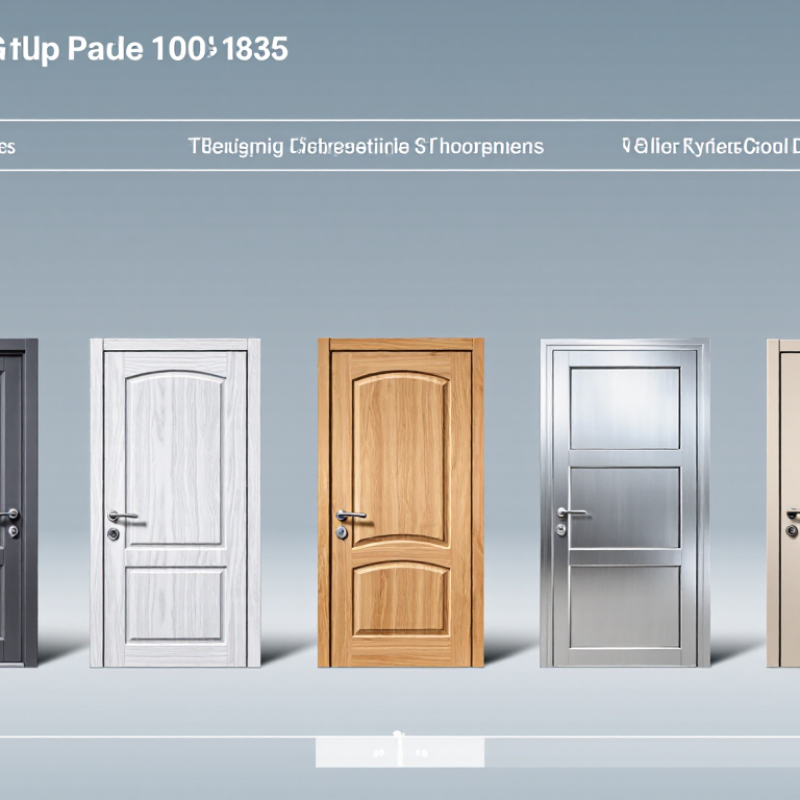
Indicative entry-level retail price ranges for common door types, shown in USD per door slab or basic door unit. Lower purchase prices generally improve affordability, while climate, shipping, installation, security hardware, and local taxes can substantially change the final cost.

Reference basis: broad 2024–2025 public construction-cost and retail-market ranges for standard residential doors. Prices are indicative, exclude installation and freight, and vary by country, size, finish, glazing, and specifications.

Which Door Materials Offer the Best Value?

For global buyers, steel and fiberglass doors often offer the strongest material value. Steel usually costs less than solid wood and resists warping in dry climates. Fiberglass handles moisture, salt air, and temperature changes with fewer maintenance demands. I have found that a well-fitted steel door can outperform a cheaper door with poor seals.

Energy performance matters more than appearance alone. The U.S. Department of Energy states that air sealing can reduce heating and cooling costs by 5–30%. The International Energy Agency reports that buildings used about 30% of global final energy in 2022. Therefore, buyers should compare U-factor, weatherstripping, frame insulation, and door-sweep quality. A basic fiberglass door with tight seals may deliver better value than a decorative wooden model with air gaps.

Wood remains attractive and repairable, but it needs regular sealing in humid or rainy regions. uPVC doors can be affordable and resist moisture, although weak hardware may shorten their service life. This is where value becomes difficult to measure. Purchase price is only one part. Freight, local installation skills, replacement hardware, and long-term maintenance can change the final cost. Reports provide useful benchmarks, but they cannot predict every climate or household. Check the certification details carefully. A low-cost door is not always an economical door.

How Do Door Types Compare Across Uses and Climates?

What Are the Top Affordable Doors for Global Buyers?

Door performance changes sharply with use and climate. For interior rooms, hollow-core doors are usually the lowest-cost option. They are light, simple, and easy to install. They perform poorly outdoors, however, because they resist little moisture, impact, or temperature change.

For exterior entrances, insulated steel and fiberglass doors often balance price, security, and thermal performance. Steel can dent or corrode near saltwater. Fiberglass usually handles moisture better, but repairs may be less straightforward. That trade-off is easy to overlook.

In cold climates, choose a door with a low U-factor, continuous insulation, and compression seals. The International Energy Agency and UNEP reported in their 2023 Global Status Report for Buildings that buildings use about 30% of global final energy. Small envelope weaknesses can therefore increase heating demand.

In hot climates, sealed frames and shaded glazing help limit unwanted heat. Thermally broken aluminum suits some humid regions, though standard aluminum can transfer heat quickly.

In wet coastal areas, fiberglass, uPVC, and protected hardware generally require less maintenance than untreated wood or ordinary steel.

Installation matters almost as much as the slab. U.S. Department of Energy guidance emphasizes weatherstripping and careful caulking around doors. ISO 10077-1 also provides methods for assessing thermal transmittance. A practical inspection should check the threshold, hinge alignment, drainage, and daylight around the seal.

The cheapest door is not always the cheapest project. This comparison has limits. Local labor, replacement parts, and climate data can change the final decision.

Performance is context.

What Features Should Global Buyers Check Before Ordering?

Affordable doors can look similar in photographs, but their performance may differ sharply. Global buyers should check the material, core construction, surface finish, and frame strength before comparing prices. A moisture-resistant core matters in humid coastal regions, while thermal insulation helps in colder markets. Ask for exact thickness, weight, and tolerances. Small details matter.

Request technical drawings, installation instructions, and recent test reports. Check fire, acoustic, wind, and water-resistance ratings against local building rules. Standards vary by country, so a certificate from one market may not satisfy another. Confirm whether the door opens inward or outward, and whether hinges, locks, seals, and handles are included. A missing accessory can delay installation and increase the landed cost.

Order a sample when possible. Inspect the corners, edge banding, paint consistency, and hardware movement by hand. I have seen inexpensive doors arrive with attractive panels but weak packaging and damaged frames. It is not always the factory’s fault; transport conditions and poor pallet design can cause similar problems. Ask about packaging photos, replacement procedures, warranty limits, production time, and spare parts. Payment terms and delivery estimates should be written clearly.

One overlooked question remains important: will local installers accept the door’s fixing method?

How Can Buyers Compare Suppliers, Costs, and Import Requirements?

Affordable doors are not defined by unit price alone. Buyers should compare the landed cost, including production, packaging, freight, insurance, duties, taxes, and local delivery. A supplier quote of 85 dollars may become 140 dollars after import charges. Small errors compound.

The UNCTAD Review of Maritime Transport 2023 states that over 80% of global merchandise trade moves by sea. This makes container size, loading efficiency, and port selection important cost factors. Request identical quotations from at least three suppliers. Specify door dimensions, core material, surface finish, hardware, packaging method, minimum order quantity, and production lead time. Compare defect policies, inspection procedures, and replacement terms. A factory sample can reveal warped panels, weak hinges, or damaged corners before payment. Samples expose that gap.

Import compliance needs equal attention. Confirm the correct HS code with a customs broker, then verify duty rates, VAT, labeling rules, and required certificates in the destination market. Fire-rated or insulated doors may require extra testing documents. The World Bank’s Logistics Performance Index 2023 assesses 139 economies on a 1–5 scale, including customs and shipment reliability. Buyers should use that data when estimating delays, not just freight prices. Incoterms should be written clearly, because “delivered” can hide different responsibilities. I would not trust a spreadsheet that ignores port storage, currency movement, or seasonal congestion. Recheck those assumptions before signing.

What Are the Top Affordable Doors for Global Buyers? — Comparing Suppliers, Costs, and Import Requirements
Door Type Typical Material and Construction Common Standard Size Indicative Export Price
per Door (USD)
Typical Minimum Order Main Advantages Key Limitations Import and Compliance Points
Hollow-Core Interior Door Engineered wood or fiberboard skins with a lightweight honeycomb or paper core 760–910 mm wide
1,980–2,100 mm high
$25–$75
FOB estimate
Usually 50–200 pieces Lowest cost, light shipping weight, easy to install, suitable for bedrooms and offices Limited sound insulation, moisture resistance, and impact strength Confirm formaldehyde limits, packaging strength, fumigation rules for wood packaging, and local fire-rating requirements
MDF or HDF Molded Door Pressed wood-fiber face skins over a solid or semi-hollow engineered core 760–910 mm wide
1,980–2,100 mm high
$45–$120
FOB estimate
Usually 50–150 pieces Smooth painted surface, consistent dimensions, broad design selection, competitive cost Edges require protection from standing water; heavier than hollow-core doors Check moisture resistance, emissions certification, pallet treatment, and whether hardware is included in the declared value
Solid-Core Engineered Wood Door Engineered wood frame and core with veneer, laminate, or painted finish 800–1,000 mm wide
2,000–2,200 mm high
$90–$220
FOB estimate
Usually 20–100 pieces Better durability, sound reduction, and perceived quality than hollow-core doors Higher freight cost because of weight; may need stronger hinges and frames Verify moisture content, veneer legality where applicable, fire performance, and container loading method
PVC or WPC Interior Door Polyvinyl chloride or wood-plastic composite skin with a reinforced internal core 700–900 mm wide
1,900–2,100 mm high
$55–$160
FOB estimate
Usually 50–200 pieces Moisture resistant, easy to clean, suitable for bathrooms and humid climates Thermal expansion, lower premium appearance in some finishes, and possible color fading outdoors Confirm polymer composition, fire classification, recycling markings, and restrictions on additives in the destination market
Steel Security Door Galvanized or cold-rolled steel skins with honeycomb, polystyrene, or mineral-wool core 800–1,000 mm wide
2,000–2,200 mm high
$120–$350
FOB estimate
Usually 20–100 pieces High security, impact resistance, and suitability for exterior entrances Heavy, vulnerable to corrosion if poorly coated, and more expensive to ship Check corrosion protection, lock and cylinder standards, fire rating, wind-load requirements, and local security classifications
Aluminum-Glass Door Aluminum frame with tempered, laminated, or insulated glass panels 700–1,200 mm wide
2,000–2,400 mm high
$140–$420
FOB estimate
Usually 10–50 pieces Low maintenance, corrosion resistance, modern appearance, and good daylight transmission Glass breakage risk, higher packaging needs, and variable thermal performance Confirm safety-glass marking, glass thickness, impact requirements, packaging insurance, and energy-efficiency rules
Fiberglass Reinforced Polymer Door Fiberglass-reinforced polymer skins with foam or engineered core 800–1,000 mm wide
2,000–2,200 mm high
$150–$380
FOB estimate
Usually 20–100 pieces Good moisture resistance, low maintenance, and stable performance in coastal environments Higher initial price and fewer design options than basic interior doors Verify fire, smoke, UV, and chemical-resistance test reports required by the destination country
Fire-Rated Steel or Timber Door Steel or solid timber construction with mineral core, intumescent seals, and rated hardware 800–1,200 mm wide
2,000–2,400 mm high
$220–$650
FOB estimate
Usually 10–50 pieces Designed for regulated commercial, residential, and industrial applications Certification, hardware, testing, and installation requirements increase total cost Request third-party fire-test evidence, labeling, closer and hinge ratings, smoke-seal details, and destination-country approval
Buyer comparison note: The price ranges are indicative export-level estimates for standard, uninstalled doors and can vary by material grade, finish, hardware, certification, order volume, packaging, season, and trade term. Buyers should compare the complete landed cost, including product price, tooling, inland transport, freight, insurance, customs duty, VAT or sales tax, inspection, and installation.