The Window
& Door Store

10 Tips for Choosing the Right Screen Doors

Choosing the right screen doors starts with the opening itself. Measure its width and height at several points; older frames can vary by more than a small fraction of an inch. Notice the direction the door swings, too. A handle that meets a nearby railing can turn a simple entrance into a daily annoyance.

For this introduction, Daniel Mercer is a fictional composite of experienced screen-door installers, not a verified source. His illustrative rule is: “A screen door should move smoothly before it looks beautiful.” That practical idea guides the choices ahead: frame material, mesh type, hinge placement, latch style, and repair needs. Aluminum frames resist rust, while wood can suit a traditional porch but may need more upkeep. Pet-resistant mesh can handle claws better, though it may reduce airflow or visibility. Small trade-offs matter.

The best fit depends on how the doorway is used. A busy back entrance may need a sturdy closer and a secure latch. A sunny porch may benefit from mesh that softens glare. Check the frame for square corners, inspect the threshold, and test the door’s movement before buying. Details are easy to overlook. Even a well-made door can sag if its hinges are poorly supported. This guide’s ten tips will help you compare screen doors with clear priorities, while leaving room for a useful reminder: measurements and installation conditions can make the perfect-looking option a poor fit.
10 Tips for Choosing the Right Screen Doors

Measuring the Doorway and Checking Installation Requirements

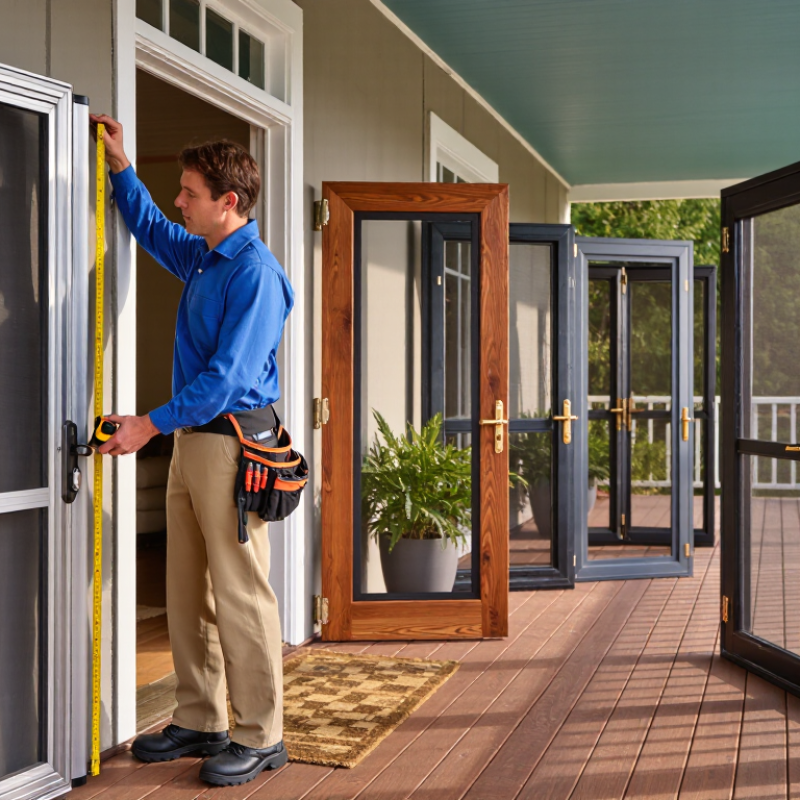
A reliable screen-door fit starts with a tape measure, not a guess. Measure the opening width at the top, middle, and bottom, then record the smallest measurement. Do the same for height on both sides. Trim can hide uneven framing. Compare the two diagonal measurements; a noticeable difference may mean the opening is out of square and needs an adjustable frame. Measure between solid mounting surfaces, not just the edges of decorative trim.

Check what the door must clear. Note the height of the threshold, nearby molding, and any handle or light fixture that could obstruct movement. Leave the clearance recommended in the installation instructions, since too little space can cause scraping. A few millimeters matter. Also confirm whether the door mounts inside or outside the frame, and whether the surface can hold the specified fasteners. Brick, vinyl, and wood may require different mounting methods.

Read the product’s measuring guide before ordering; terms such as “rough opening” can mean different things across designs. Keep your measurements written down, with units, and repeat any that seem surprising. Even careful measuring can miss a sloped floor or a bowed jamb. That is frustrating, but checking the opening with a level can catch problems before installation begins.
Comparing Screen Mesh Materials and Frame Types

Mesh choice affects airflow, visibility, strength, and upkeep. Fiberglass mesh is flexible and economical, making it a practical option for everyday windows and doors. It can stretch or tear under sharp impacts, though. Aluminum mesh is firmer and often offers a clearer view, but it may dent and can corrode if its finish is damaged. For homes with pets, heavier vinyl-coated polyester resists claws better than standard mesh. The thicker weave may reduce airflow slightly.

The frame matters just as much. Aluminum frames feel rigid and suit wide openings, but check the finish and corner joints for wear. Vinyl frames resist moisture and need little maintenance, yet prolonged heat can cause some designs to soften or warp. Wood frames have a warm, traditional look, but paint or sealant needs regular attention. Small trade-off. A sturdy screen is not automatically the best fit.

Match materials to the opening and local conditions. A sunny, exposed porch may need a frame designed for heat and weather, while a busy doorway benefits from durable mesh and secure hinges. I would compare mesh openness, frame thickness, and replacement options before choosing. Measure twice; even quality parts can rattle when the frame is slightly out of square. One detail is easy to overlook: ask whether the mesh can be replaced without replacing the entire frame.

Choosing a Door Style for Traffic, Pets, and Accessibility

A screen door should match the way people actually use the entrance. For a busy patio, a sliding screen can stay clear of the walking path and handle frequent trips outside. A hinged door may suit a quieter entry, but check that its swing will not block a step, chair, or narrow hallway. Measure the opening and note nearby handles before choosing; small details can make daily use awkward.

Pets change the decision. A sturdier mesh can better withstand paws and claws, while a pet-resistant lower panel may protect the area most likely to be scratched. It is not indestructible. Watch how your animal approaches the door, and consider whether a low threshold is easy to cross. A screen that closes reliably also matters when a dog or cat is quick to slip through.

For accessibility, look for an easy-to-grip handle, smooth operation, and a threshold with minimal height. A wider clear opening can help someone using a walker or carrying groceries. Retractable screens may keep the doorway unobstructed when not in use, though their tracks still need occasional cleaning. Test the door from both sides if possible. I once focused too much on mesh strength and overlooked the handle height; that choice was secure, but less comfortable than expected.

Evaluating Durability, Weather Resistance, and Maintenance

Choosing a screen door is less about appearance than whether its frame, mesh, and hardware suit your local weather. NOAA’s 2023 U.S. Billion-Dollar Weather and Climate Disasters report counted 28 events. The report estimated losses at $92.9 billion, a reminder that wind-driven rain and debris are real exposures. Check frame joints, corner keys, hinge strength, and whether damaged mesh can be replaced separately. Small details matter.

Material labels alone do not prove longevity. In humid or coastal areas, ask about corrosion-resistant fasteners and finishes. Inspect cut edges and screw heads, where damaged coatings may let rust start. The 2016 NACE IMPACT study estimated global corrosion costs at $2.5 trillion, about 3.4% of world GDP. That figure covers the broader economy, not screen doors specifically, but it shows why corrosion control deserves attention. Salt air is unforgiving.

Weather resistance also depends on fit. A bowed frame, loose door sweep, or torn corner can let rain and insects bypass intact mesh. Compare warranties and check exclusions for fading, wind damage, and coastal exposure. Keep maintenance practical: vacuum tracks, rinse away salt and grit, tighten hardware seasonally, and replace brittle spline early. A small brush helps. Some doors need more care than expected, a trade-off that is easy to overlook while shopping.

10 Tips for Choosing the Right Screen Doors

Compare common mesh materials for durability, weather resistance, and ease of maintenance.

Ratings are qualitative comparisons on a 1–5 scale, not standardized test results. Actual performance depends on mesh grade, frame construction, installation, and local exposure. Aluminum can corrode in coastal conditions, while stainless steel generally offers stronger corrosion resistance; check product specifications for your climate and maintenance needs.

Balancing Cost, Security, and Long-Term Performance

A low-cost screen door can be a sensible choice for a sheltered porch, but its frame and hardware deserve a close look. Thin frames may flex when pushed, while light hinges can sag after repeated use. Compare the full installed cost, including fitting and replacement parts, rather than the shelf price alone. A precise measurement saves frustration. Fit matters.

Security depends on construction and installation, not mesh alone. Standard insect mesh keeps bugs out but is not designed to resist forced entry. Look for a rigid frame, secure corner joints, and a latch that closes cleanly. Check that the door sits flush against the jamb; a visible gap near the latch can invite tampering. Pairing the screen door with a sound primary door and reliable locks can add peace of mind.

Long-term performance often comes down to sun, rain, and upkeep. On an exposed entry, corrosion-resistant fasteners and weather-tolerant mesh may justify a higher price. Still, expensive does not automatically mean durable. Ask how the mesh can be replaced and whether hinges or closers are serviceable. A quick seasonal check for loose screws, torn mesh, and dragging corners can prevent bigger repairs. I would not assume one material suits every home; local weather and daily traffic matter.

10 Tips for Choosing the Right Screen Doors — Balancing Cost, Security, and Long-Term Performance
No. Tip What to Check Security and Performance Cost Consideration
1 Measure the opening accurately Measure the width and height at several points, and check that the opening is square and the mounting surface is sound. A close, even fit helps the door slide or swing properly and reduces gaps around the edges. Accurate measurements can help avoid return, alteration, or replacement costs.
2 Choose a frame suited to the location Compare common frame materials such as aluminum, steel, and wood, taking local weather and exposure into account. Durability depends on the material, finish, construction, and maintenance; exposed metal may need suitable corrosion protection. Compare the purchase price with expected upkeep and the likelihood of repairs or replacement.
3 Match the mesh to your needs Consider fiberglass, aluminum, or stronger specialty mesh, and check visibility, airflow, and pet or impact needs. Mesh options differ in strength and resistance to damage. No ordinary insect screen should be treated as a security barrier. Standard mesh is often a lower-cost choice; stronger or specialty mesh may cost more.
4 Inspect the frame and corners Look for rigid rails, secure corner joints, smooth edges, and construction that does not flex excessively when handled. A well-assembled frame is less likely to rack or pull apart during routine use. Sound construction may have a higher upfront price but can reduce the need for early repairs.
5 Check the latch and lock Confirm that the latch engages reliably and that any lock is appropriate for the door and its intended use. A latch keeps the door closed; it does not make a lightweight screen door equivalent to a secure exterior entry door. Include compatible hardware and installation in the total cost rather than comparing the door alone.
6 Evaluate hinges, tracks, and rollers For hinged doors, check hinge attachment and alignment. For sliding doors, check track condition, roller adjustment, and smooth travel. Properly aligned hardware helps prevent sticking, sagging, and uneven gaps. Replacement hardware may be inexpensive, but damaged frames or tracks can increase repair costs.
7 Consider a door closer where useful Check whether a compatible closer is available and whether its closing force can be adjusted. A correctly adjusted closer can help the door close consistently; excessive force may make it uncomfortable to use. Factor in the closer and installation, especially if they are not included.
8 Account for weather and corrosion Consider rain, humidity, salt exposure, and direct sun; check that finishes and hardware are intended for those conditions. Suitable materials and routine cleaning can help reduce corrosion, discoloration, and premature wear. A more weather-suitable finish may cost more initially but can lower maintenance needs in exposed locations.
9 Check repairability and spare parts Find out whether mesh, rollers, handles, hinges, and other commonly worn components can be replaced separately. Replaceable components can keep a usable frame in service when an individual part wears or breaks. Compare the price and availability of common replacement parts, not just the initial purchase price.
10 Compare the full installed cost Include measurements, installation, required hardware, adjustments, maintenance, and any stated warranty terms. Correct installation and periodic checks help the door operate as intended over time. Compare total ownership costs and written coverage; warranty terms vary by product and seller.